
Middle East Peace: Market Implications of Rising Stocks and Falling Oil Prices
- Authors

- Name
- MarketVibe Team
- @1marketvibe
Middle East Peace: Market Implications of Rising Stocks and Falling Oil Prices
Introduction
The prospect of peace in the Middle East, particularly involving Iran, has significant implications for global financial markets. Recent developments suggest a potential easing of tensions, leading to a notable rise in stock markets and a decline in oil prices. Understanding these dynamics is crucial for traders looking to navigate the current market environment effectively. This article will explore how these geopolitical events impact market stability and risk, using MarketVibe's metrics as a guide.
Market Reactions
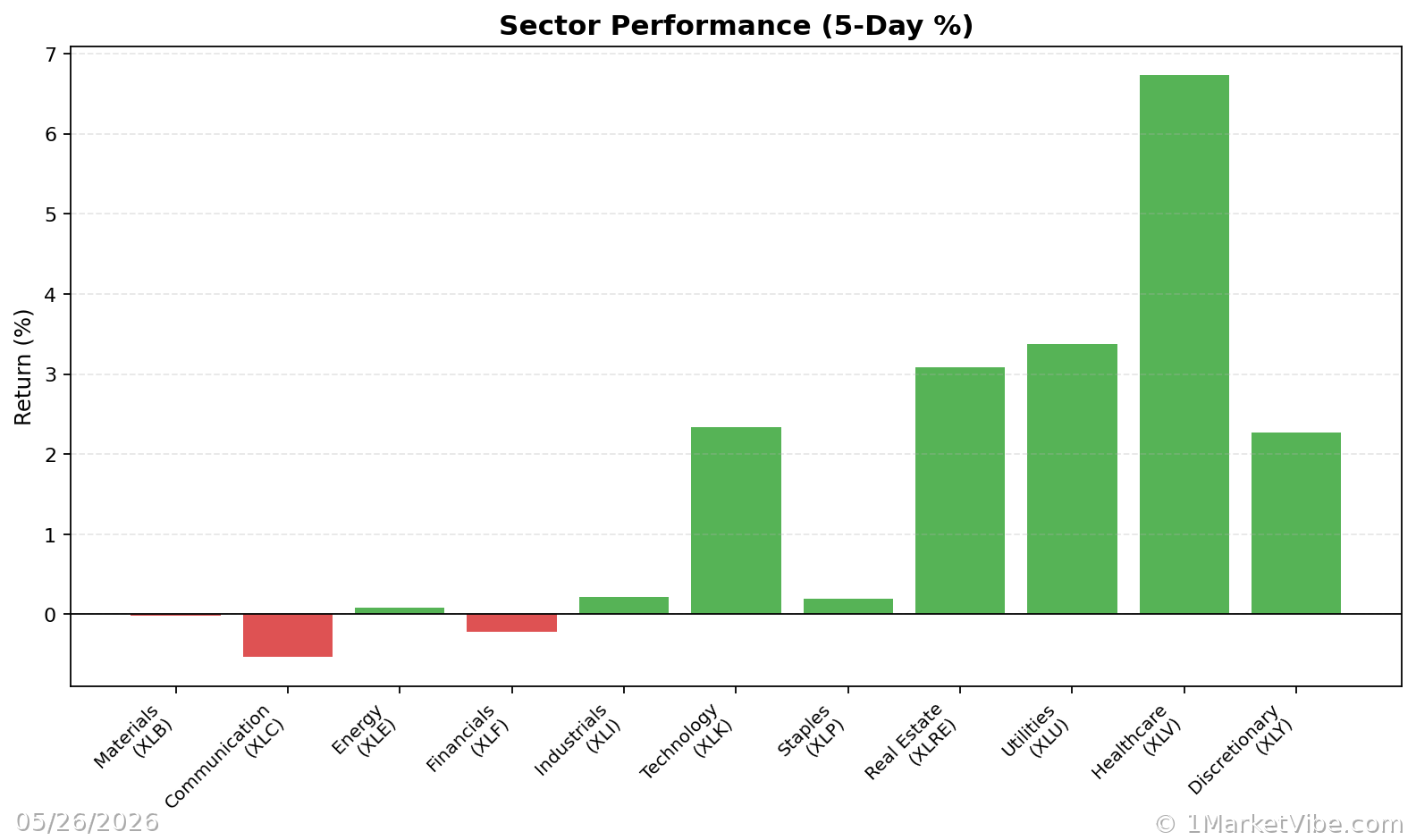
As optimism grows around peace negotiations in the Middle East, we've observed a sharp rise in stock prices. This is largely driven by improved investor sentiment, as the potential for reduced geopolitical risk encourages more risk-taking. Concurrently, oil prices have declined, reflecting expectations of increased supply and reduced geopolitical risk premiums. The U.S. dollar has also slipped, as investors shift towards riskier assets.
Key Drivers
Influence of Potential Iran Peace Deal
The potential for a peace deal with Iran is a significant driver of current market trends. Such a development could stabilize the region, leading to more predictable oil supplies and reduced volatility in energy markets. This, in turn, lowers the risk of inflationary pressures from rising oil prices, providing a more stable backdrop for economic growth.
Role of Investor Sentiment
Investor sentiment plays a crucial role in driving stock prices. The anticipation of peace reduces uncertainty, encouraging investors to allocate more capital to equities. This shift is reflected in market breadth indicators, such as the % Above 50-DMA, which measures the percentage of stocks trading above their 50-day moving average—a key indicator of market health and trend strength.
Economic Implications
Market Stability and Crash Risk
Peace in the Middle East could lead to greater market stability by reducing one of the major geopolitical risks that have historically caused market disruptions. This aligns with the Crash Warning Index (CWI), which currently reads 5.1. A CWI reading in this range suggests moderate risk, indicating that while the market is not in immediate danger of a crash, vigilance is still required.
Long-term Effects on Oil and Commodity Prices
A sustained peace could lead to a long-term decline in oil prices as supply constraints ease. This would have broad implications for inflation and economic growth, potentially leading to lower input costs for businesses and increased consumer spending power.
Market Predictions
Current CW Index Signals
The current CWI reading of 5.1 suggests a moderate level of risk, consistent with the observed market trends. This index, which combines various risk dimensions such as breadth, volatility, and defensive behavior, provides a comprehensive view of market risk. Traders should monitor this index closely, as it offers a 4-6 week early warning capability for potential market shifts.
Short-term Forecasts
In the short term, if peace negotiations continue to progress, we can expect further stabilization in markets. However, traders should remain cautious, as any setbacks in negotiations could quickly reverse these trends, leading to increased volatility.
Risks and Considerations
Potential Volatility
While the current outlook is positive, the situation remains fluid. Any faltering in peace negotiations could lead to a resurgence of volatility, particularly in oil markets. Traders should be prepared for such scenarios by monitoring volatility metrics like ATR%, which measures average true range as a percentage of price, indicating the current volatility regime.
Economic Uncertainties
Despite the positive developments, economic uncertainties remain. Factors such as global economic growth, central bank policies, and other geopolitical tensions could impact market stability. Traders should consider these variables when making investment decisions.
Conclusion
The potential for peace in the Middle East presents a unique opportunity for market stability and reduced crash risk. By understanding the implications of these developments through MarketVibe's metrics, traders can make more informed decisions. Monitoring the Decision Edge Dashboard and other MarketVibe tools can provide valuable insights into market breadth, volatility, and risk conditions.
To see these breadth and risk metrics in one place each day, you can use the Decision Edge dashboard at 1marketvibe.com.
Disclaimer: This article is for informational purposes only and does not constitute financial advice. Always conduct your own research or consult a financial advisor before making investment decisions.
Charts