

Five Market Signals That May Indicate a Future Downturn
- Authors

- Name
- MarketVibe Team
- @1marketvibe
Five Market Signals That May Indicate a Future Downturn
In the ever-evolving landscape of financial markets, understanding the signals that may indicate a future downturn is crucial for traders and investors. By leveraging MarketVibe's metrics, we can gain insights into market conditions that help inform risk management and strategic decisions. This article will explore five key market signals that may suggest an impending downturn, focusing on how these metrics work, their interpretation, and practical applications.
1. Crash Warning Index (CWI)
Why Traders Should Care
The Crash Warning Index (CWI) is a composite measure that evaluates several risk dimensions, including market breadth, volatility, and defensive behavior. It serves as an early warning system for potential market corrections. Traders should pay attention to CWI because it helps identify elevated risk environments, allowing them to adjust their risk exposure and avoid significant losses.
How It Works
CWI is constructed by aggregating various indicators that reflect market health, such as breadth measures and volatility metrics. For example, it considers the number of stocks above their 50-day moving average and the Average True Range (ATR%) to gauge volatility. A rising CWI indicates increasing market stress, while a declining CWI suggests improving conditions.
Interpretation
- CWI below 3: Generally indicates a stable market environment with lower risk.
- CWI between 3 and 6: Suggests caution as risk levels are moderate.
- CWI above 6: Signals elevated risk, making corrections more likely.
Real-World Scenario
Imagine a scenario where the CWI rises above 6 for several consecutive days. Traders might feel tempted to hold their positions, hoping for a rebound. However, a more informed approach would be to reduce exposure and focus on defensive sectors until the CWI stabilizes.
2. Percentage Above 50-Day Moving Average (% Above 50-DMA)
Why Traders Should Care
The % Above 50-DMA is a breadth indicator that measures the percentage of stocks trading above their 50-day moving average. It provides insights into the overall health of market trends and can signal potential reversals.
How It Works
This metric calculates the proportion of stocks in a given universe (e.g., S&P 500) that are trading above their 50-day moving average. A high percentage indicates strong market breadth, while a low percentage suggests weakness.
Interpretation
- Above 70%: Indicates robust market health and a strong uptrend.
- Below 30%: Suggests market weakness and potential oversold conditions.
Real-World Scenario
Consider a market where the % Above 50-DMA falls below 30%. Traders might panic and sell off their holdings. However, recognizing this as a potential oversold condition, a more strategic approach would be to wait for confirmation of a reversal before making significant portfolio changes.
3. Advance/Decline Net (A/D Net)
Why Traders Should Care
The Advance/Decline Net (A/D Net) measures the difference between advancing and declining stocks. It is a valuable indicator of market strength and internal momentum.
How It Works
A/D Net is calculated by subtracting the number of declining stocks from the number of advancing stocks. A positive A/D Net indicates more stocks are rising than falling, suggesting bullish momentum.
Interpretation
- Positive A/D Net: Reflects strong market internals and potential for continued upward movement.
- Negative A/D Net: Indicates market weakness and potential for further declines.
Real-World Scenario
In a scenario where the A/D Net turns negative while the market index remains flat, traders might be tempted to ignore the warning. However, understanding the underlying weakness, a prudent strategy would be to tighten stops and prepare for potential downside.
4. New High–New Low (NH–NL)
Why Traders Should Care
The New High–New Low (NH–NL) indicator tracks the number of stocks making new 52-week highs versus new lows. It provides insights into market leadership and trend sustainability.
How It Works
NH–NL is calculated by comparing the number of stocks hitting new highs to those hitting new lows. A higher number of new highs indicates strong market leadership.
Interpretation
- Expansion of new highs: Suggests a healthy market with strong leadership.
- Expansion of new lows: Indicates potential market weakness and risk of downturn.
Real-World Scenario
Suppose NH–NL shows an expansion of new lows while major indices are near all-time highs. Traders might be tempted to chase the rally, but recognizing the divergence, a more cautious approach would involve reducing exposure to weaker sectors.
5. Average True Range Percentage (ATR%)
Why Traders Should Care
The Average True Range Percentage (ATR%) measures market volatility relative to price. It helps traders understand the current volatility regime and adjust their strategies accordingly.
How It Works
ATR% is calculated by dividing the ATR by the current price and expressing it as a percentage. It provides a normalized view of volatility, allowing comparisons across different market conditions.
Interpretation
- Low ATR%: Corresponds to quiet, trending phases.
- High ATR%: Indicates choppy or unstable market conditions.
Real-World Scenario
Imagine a period where ATR% spikes significantly. Traders might feel compelled to exit positions due to increased volatility. However, recognizing it as a temporary spike, a more informed approach would involve using tighter stops and waiting for volatility to subside before making major decisions.
How to Use These Insights in a Process
To effectively incorporate these insights into your trading process:
- When breadth is weak and CWI is high, emphasize defense and reduce new risk.
- When breadth and leadership broaden out, be more open to adding exposure — if your setups are there.
- Use the Market Dashboard as a high-level regime label, then check internals for confirmation.
Common Misuses & Misconceptions
- Treating metrics as stand-alone entry signals: Always consider the broader market context and combine multiple indicators.
- Ignoring sector rotation and time frame: Align your analysis with the relevant sector dynamics and your trading horizon.
- Overreacting to one-day changes: Focus on trends and sustained movements rather than daily fluctuations.
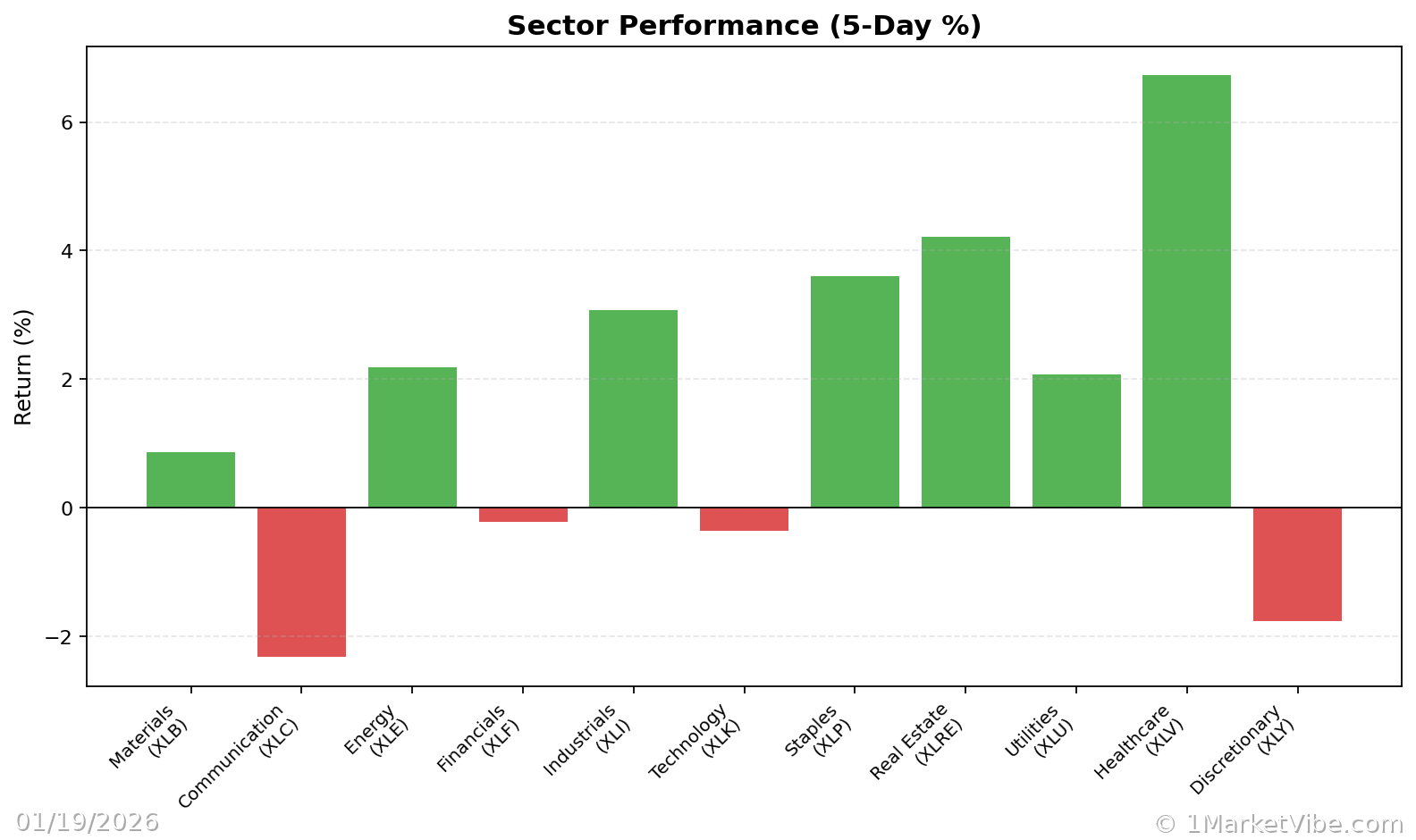
To see these breadth and risk metrics in one place each day, you can use the Decision Edge dashboard at 1marketvibe.com.
Disclaimer: This article is for informational purposes only and does not constitute financial advice. Always conduct your own research or consult a financial advisor before making investment decisions.