

The Potential Impact of SpaceX's Telecom Strategy on Major Carriers
- Authors

- Name
- MarketVibe Team
- @1marketvibe
The Potential Impact of SpaceX's Telecom Strategy on Major Carriers
Orientation – What Are We Explaining?
In this article, we explore the potential impact of SpaceX's new venture into the telecommunications sector, specifically targeting the existing customer base of major carriers like T-Mobile, AT&T, and Verizon. This move could significantly disrupt the competitive dynamics of the telecom industry. Traders should care about this development because it could influence market sentiment, sector performance, and investment strategies. Understanding how SpaceX's strategy fits into the broader market context can help traders make informed decisions about risk exposure and portfolio adjustments.
How It Works – Mechanics & Data
SpaceX's strategy involves building a terrestrial mobile network, leveraging the spectrum it acquired from EchoStar. This spectrum, although smaller in comparison to what the major carriers hold, is intended to be used creatively to establish a network that complements its existing satellite-based Starlink service. The plan includes deploying small cellular base stations, or femtocells, using Starlink dishes to provide connectivity across the country. This approach could potentially offer a more flexible and cost-effective alternative to traditional large cellular base stations.
Interpretation – What Different Levels Tend to Mean
The entry of SpaceX into the telecom sector could lead to several potential outcomes:
- Pricing Pressure: If SpaceX offers competitive pricing, it could force major carriers to adjust their pricing strategies, impacting their revenue and profitability.
- Service Innovation: The integration of satellite and terrestrial networks might push existing carriers to innovate their service offerings to retain customers.
- Market Share Shifts: SpaceX's entry could lead to shifts in market share, particularly if it successfully attracts customers from the major carriers.
From a MarketVibe perspective, traders should monitor metrics like the Crash Warning Index (CWI) and % Above 50-DMA to gauge market sentiment and breadth. For instance, a high CWI combined with weak breadth could indicate a cautious environment where defensive strategies might be prudent.
Real-World Scenarios – How This Shows Up in Markets
Scenario: A Topping Environment
- Metrics: Breadth deteriorates (% Above 50-DMA declines) while major indices remain stable.
- Temptation: Traders might feel inclined to hold positions, expecting stability.
- Informed Response: Recognize the underlying weakness and consider reducing exposure or hedging.
Scenario: A New Bull Leg
- Metrics: % Above 50-DMA surges as SpaceX's strategy gains traction, indicating strong market interest.
- Temptation: Jump into high-risk positions.
- Informed Response: Add exposure cautiously, ensuring setups align with broader market trends.
Scenario: Volatility Spike
- Metrics: ATR% increases as market reacts to SpaceX's announcements.
- Temptation: Panic sell or overreact to short-term volatility.
- Informed Response: Use volatility as a signal to reassess risk levels and adjust positions accordingly.
How to Use This Insight in a Process
- Monitor Breadth and Volatility: Use MarketVibe's Decision Edge dashboard to keep an eye on breadth (% Above 50-DMA) and volatility (ATR%) to understand the market's reaction to SpaceX's moves.
- Adjust Risk Exposure: If the CWI indicates elevated risk, consider reducing exposure in telecom sectors or implementing hedging strategies.
- Stay Informed: Regularly review sector scores and leadership trends to identify shifts in market dynamics influenced by SpaceX's strategy.
Common Misuses & Misconceptions
Treating Metrics as Stand-Alone Signals: Traders might rely solely on one metric, like % Above 50-DMA, without considering the broader context. Instead, use it in conjunction with other indicators like CWI and sector scores.
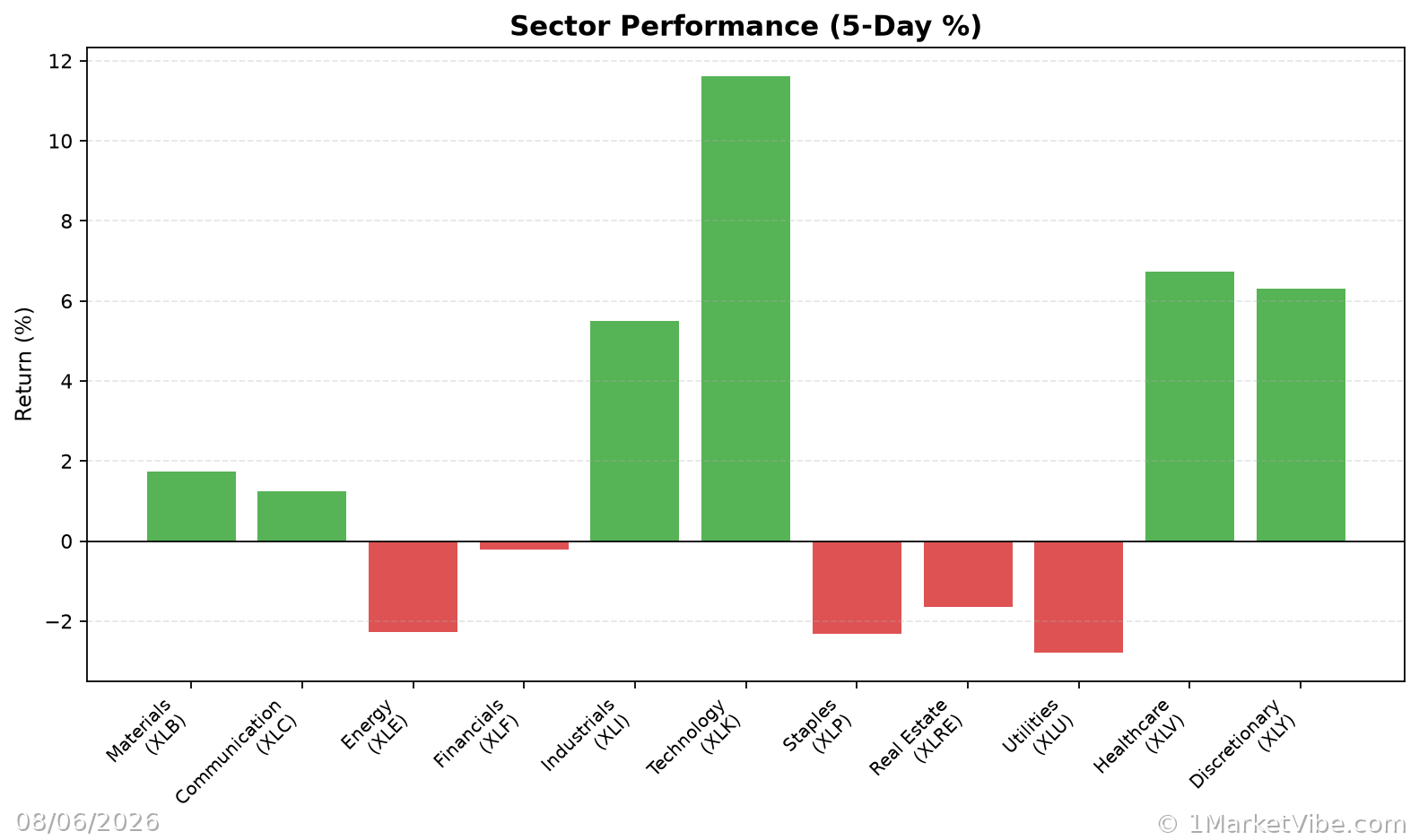
Ignoring Sector Rotation: Focusing only on major indices can lead to missing sector-specific shifts. Pay attention to how SpaceX's strategy impacts telecom sector performance.
Overreacting to One-Day Changes: Short-term fluctuations can be misleading. Look for sustained trends in metrics before making significant portfolio changes.
To see these breadth and risk metrics in one place each day, you can use the Decision Edge dashboard at 1marketvibe.com.
DISCLAIMER: This article is for informational purposes only and does not constitute financial advice. Please consult with a financial advisor before making any investment decisions.