

The Federal Reserve's Unprecedented Move and Its Impact on Market Stability
- Authors

- Name
- MarketVibe Team
- @1marketvibe
The Federal Reserve's Unprecedented Move and Its Impact on Market Stability
Understanding the Federal Reserve's actions is crucial for traders aiming to navigate market risks effectively. The Fed's decisions can significantly influence market stability, affecting everything from interest rates to investor sentiment. In this article, we will explore the implications of a recent unprecedented move by the Federal Reserve, how it ties into MarketVibe's metrics, and how traders can adjust their strategies accordingly.
Historical Context
Over the past 75 years, the Federal Reserve has played a pivotal role in shaping economic policy and market conditions. Traditionally, the Fed's actions, such as adjusting interest rates or engaging in quantitative easing, have been aimed at managing inflation and unemployment. These moves have historically impacted market volatility and investor confidence, often serving as catalysts for market rallies or downturns.
Current Fed Decision
Recently, Fed Chair Jerome Powell announced his intention to remain on the Federal Reserve Board of Governors even after his term as chair ends. This decision breaks with precedent and has raised questions about its potential impact on market stability. The continuity of Powell's influence on monetary policy could lead to sustained market expectations regarding interest rates and economic support measures.
Market Reactions
The immediate market response to Powell's announcement was mixed. Some sectors experienced increased volatility as investors reassessed their expectations for future Fed policy. Analysts have noted that such a move could lead to increased uncertainty, particularly if it signals a shift in the Fed's approach to managing economic challenges.
Debt and Cash Flow Concerns
Compounding the situation, the federal government has announced plans to issue more debt than initially expected due to weakened cash flow. This development could pressure bond markets and influence long-term yields, further impacting market stability.
Long-term Yield Trends
Historically, changes in Fed policy have had a significant relationship with long-term yields. Analysts tracking this relationship since 1990 describe the current situation as unprecedented. If the Fed's actions lead to rising yields, it could signal tighter financial conditions, affecting everything from corporate borrowing costs to consumer loans.
Investor Sentiment
Current sentiment analysis suggests a cautious outlook among investors. The potential for increased volatility and uncertainty has led some to adopt defensive strategies, such as reallocating assets to more stable sectors or increasing cash holdings.
MarketVibe Metrics and Interpretation
Crash Warning Index (CWI)
The Crash Warning Index (CWI) is a composite metric that combines several risk dimensions, including breadth, volatility, and defensive behavior. With a current reading of 5.4, the CWI suggests elevated risk levels, indicating that corrections are more likely. Traders should be aware that a CWI above 6 typically signals heightened market risk, prompting a defensive posture.
% Above 50-DMA
The percentage of stocks above their 50-day moving average (% Above 50-DMA) serves as a breadth indicator, reflecting the overall health of market trends. A low percentage indicates weak market breadth, often preceding or accompanying market downturns. Conversely, a high percentage suggests robust market participation and potential for sustained rallies.
ATR% and Volatility
Average True Range Percentage (ATR%) measures market volatility relative to price. High ATR% values often correspond to choppy or unstable market phases, while low values indicate quieter, trending conditions. In the current environment, rising ATR% could signal increased market turbulence in response to Fed-related uncertainties.
Real-World Scenarios
Scenario 1: Topping Environment
Imagine a scenario where the market index continues to grind higher, but the % Above 50-DMA begins to deteriorate. This divergence often signals a topping environment, where underlying market strength weakens even as prices rise. Traders might feel tempted to chase the rally, but a more informed approach would emphasize caution and risk management.
Scenario 2: Bull Leg Surge
In a strong new bull leg, the % Above 50-DMA surges and remains elevated, indicating broad market participation. This scenario suggests a healthy trend, where traders can consider increasing exposure, provided their setups align with broader market conditions.
Scenario 3: Volatility Spike
A sudden spike in ATR% and an accelerating CWI could indicate a volatility event, such as a geopolitical shock or unexpected economic data. In such cases, traders might instinctively react by reducing exposure. However, a more strategic response would involve assessing the broader market context and adjusting risk exposure accordingly.
How to Use This Insight in a Process
Traders can incorporate these insights into their process by:
- Emphasizing Defense: When breadth is weak and CWI is high, prioritize defensive strategies and reduce new risk exposure.
- Broadening Exposure: When breadth and leadership expand, consider increasing exposure, but only if your setups are favorable.
- Using Market Dashboard: Leverage the Market Dashboard as a high-level regime label, then confirm with internal metrics like CWI and % Above 50-DMA.
Common Misuses & Misconceptions
Traders often misuse these metrics by:
- Treating Them as Stand-Alone Signals: Metrics should guide risk posture, not dictate precise entry or exit points.
- Ignoring Context: Consider sector rotation and broader market conditions when interpreting metrics.
- Overreacting to One-Day Changes: Focus on trends and sustained signals rather than daily fluctuations.
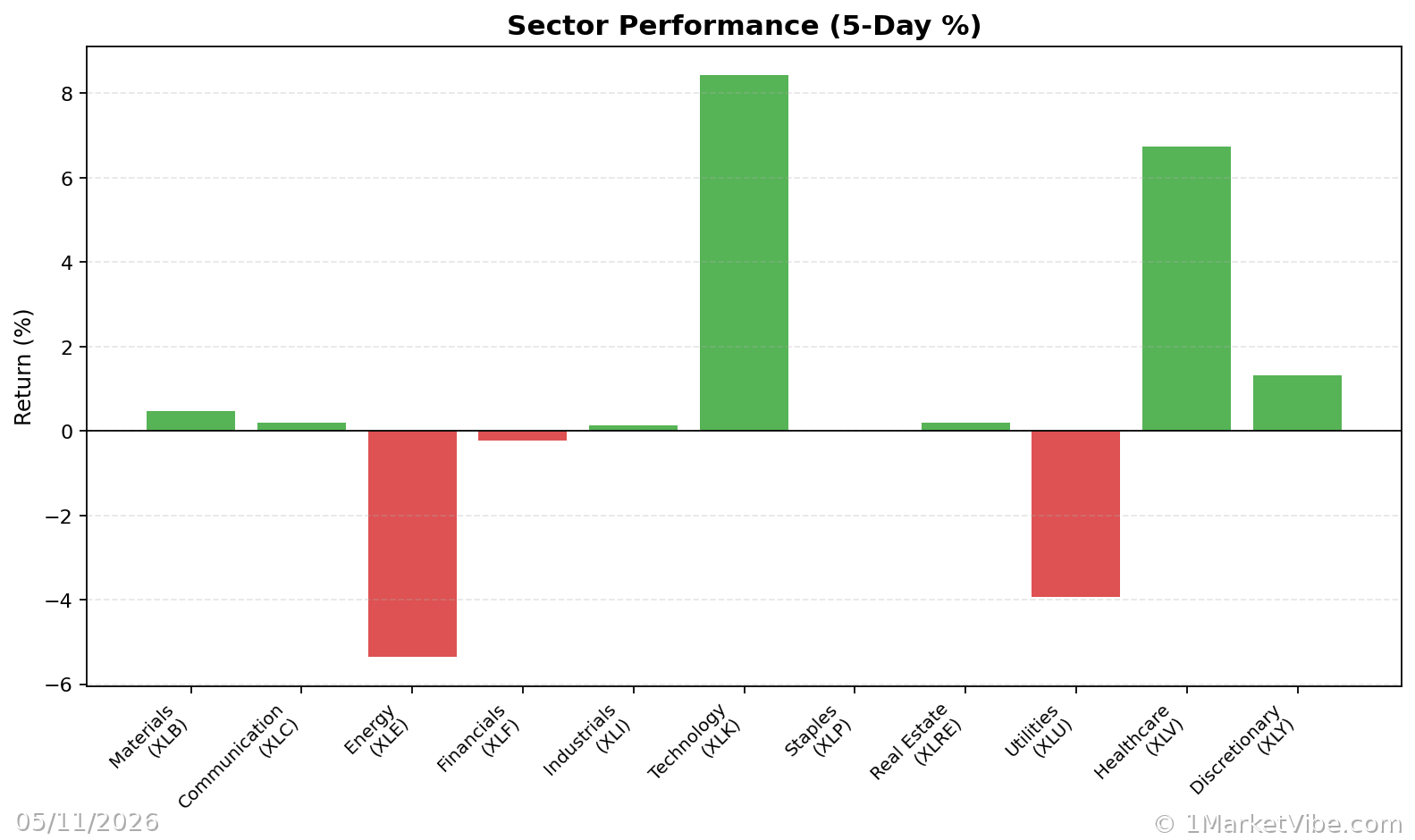
To see these breadth and risk metrics in one place each day, you can use the Decision Edge dashboard at 1marketvibe.com.
DISCLAIMER: This article is for informational purposes only and should not be considered financial advice. Always consult with a financial advisor before making investment decisions.