

Polymarket's Growth Unveils Fraud and Market Implications
- Authors

- Name
- MarketVibe Team
- @1marketvibe
Polymarket's Growth Unveils Fraud and Market Implications
In recent years, Polymarket has emerged as a significant player in the prediction market space, rapidly expanding its platform and user base. However, this growth has not been without its challenges. The platform's swift expansion has inadvertently opened doors for fraudulent activities, raising concerns about market integrity and the broader implications for investors and traders. This article explores the mechanics of Polymarket's growth, the fraud issues it faces, and the lessons that can be drawn for market participants.
Understanding Polymarket's Expansion
Polymarket has positioned itself as a leader in decentralized prediction markets, where users can bet on the outcomes of real-world events. This innovative approach has attracted a wide audience, eager to leverage the platform's potential for speculative gains. However, rapid growth often comes with increased complexity and operational challenges. As Polymarket scaled, maintaining stringent oversight became more difficult, creating vulnerabilities that fraudsters could exploit.
Why Traders Should Care
For traders, understanding the dynamics of platforms like Polymarket is crucial. Such platforms can influence market sentiment and liquidity, impacting broader financial markets. Traders can use insights from these developments to inform their risk management strategies, particularly in sectors influenced by prediction markets.
Mechanics of Market Vulnerabilities
The core issue with Polymarket's growth lies in its operational oversight. As the platform expanded, the sheer volume of transactions and new users made it challenging to monitor activities effectively. This lack of oversight created opportunities for fraudulent activities, such as market manipulation and insider trading. These activities exploit weaknesses in the platform's infrastructure and can lead to significant financial losses for unsuspecting users.
How Fraud Occurs
Fraud in prediction markets typically involves manipulating odds or outcomes to benefit certain participants. This can be achieved through false information dissemination or collusion among users to skew market results. Such activities undermine the platform's integrity and can have ripple effects on market confidence and participation.
Regulatory Landscape and Oversight Gaps
Currently, the regulatory framework governing prediction markets like Polymarket is still evolving. While some jurisdictions have established guidelines, others remain ambiguous, creating a patchwork of regulations that can be difficult to navigate. This regulatory uncertainty allows fraud to flourish, as enforcement is inconsistent and often reactive rather than proactive.
Potential Consequences
For Polymarket, the implications of fraud are significant. Beyond financial losses, the platform risks damaging its reputation, which can deter new users and investors. For the broader market, these issues highlight the need for robust regulatory frameworks that can adapt to the unique challenges posed by emerging financial technologies.
Real-World Scenarios
Scenario 1: A Topping Environment
Imagine a scenario where Polymarket experiences a surge in fraudulent activities, leading to a deterioration in market confidence. Despite an overall bullish market trend, the platform's internal metrics, such as the number of new users or transaction volumes, begin to decline. Traders might feel tempted to exit positions prematurely, fearing broader market contagion. However, a more informed approach would involve monitoring MarketVibe's % Above 50-DMA and A/D Net indicators to assess broader market health before making decisions.
Scenario 2: A Strong New Bull Leg
In a contrasting scenario, Polymarket successfully addresses its oversight issues, leading to renewed confidence and increased participation. This could coincide with a broader market rally, where % Above 50-DMA surges and remains elevated. Traders might be tempted to increase exposure aggressively, but a prudent approach would involve using MarketVibe's Market Dashboard to confirm the sustainability of the trend.
Scenario 3: Volatility Spike
A sudden spike in market volatility, as measured by ATR%, could coincide with regulatory announcements affecting Polymarket. Traders might react by reducing exposure across the board. However, understanding the specific impacts on sectors related to prediction markets can help refine risk management strategies.
Practical Process Guidance
To effectively incorporate insights from Polymarket's situation into a trading process, consider the following:
- Monitor Breadth and Volatility: Use MarketVibe's Decision Edge Dashboard to track key metrics like % Above 50-DMA and ATR%. These indicators provide a comprehensive view of market conditions and can guide risk posture adjustments.
- Emphasize Risk Management: When market conditions are uncertain, as indicated by high CWI levels, prioritize defensive strategies and reduce new risk exposure.
- Stay Informed on Regulatory Developments: Keep abreast of changes in the regulatory landscape that could impact platforms like Polymarket. This awareness can inform sector-specific strategies and hedging decisions.
Common Misuses and Misconceptions
Traders often misuse market metrics by:
Treating Metrics as Stand-Alone Signals: Avoid relying on a single indicator for entry or exit decisions. Instead, use a combination of metrics to build a comprehensive market view.
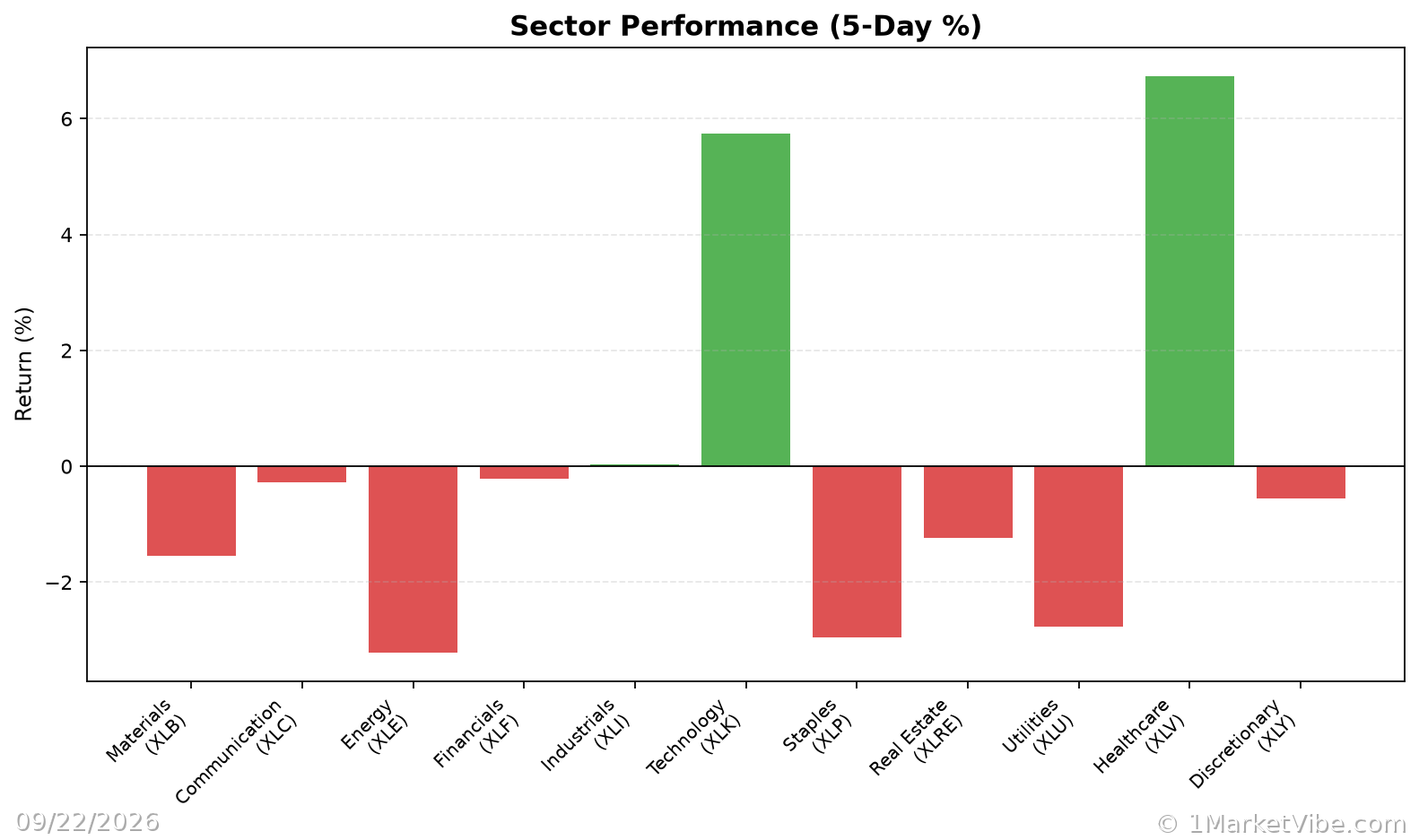
Ignoring Context: Consider the broader market environment, including sector rotation and macroeconomic factors, when interpreting metrics.
Overreacting to Short-Term Changes: Avoid making hasty decisions based on one-day metric fluctuations. Look for sustained trends to guide strategic adjustments.
To see these breadth and risk metrics in one place each day, you can use the Decision Edge dashboard at 1marketvibe.com.
DISCLAIMER: This article is for informational purposes only and does not constitute financial advice. Please consult with a financial advisor before making any investment decisions.