

Oil Prices Surge as Middle East Unrest Pushes Brent Above $100
- Authors

- Name
- MarketVibe Team
- @1marketvibe
Understanding the Impact of Oil Price Surges Amid Middle East Unrest
The recent surge in oil prices, with Brent crude surpassing $100 per barrel, has captured the attention of traders and investors worldwide. This development, driven by escalating tensions in the Middle East, particularly involving Iran, highlights the intricate dynamics of global markets. In this article, we will explore how such geopolitical events influence market behavior, using MarketVibe's metrics to provide a structured understanding of the situation.
Why Traders Should Care About Oil Price Surges
Oil prices are a critical component of global economic health and market stability. When oil prices rise sharply, it can signal potential disruptions in supply, increased costs for businesses, and inflationary pressures. For traders, understanding these dynamics is crucial for making informed decisions about risk management, portfolio adjustments, and sector exposure.
Key Decisions Informed by Oil Price Movements
- Risk Management: Rising oil prices can increase market volatility, prompting traders to reassess their risk exposure.
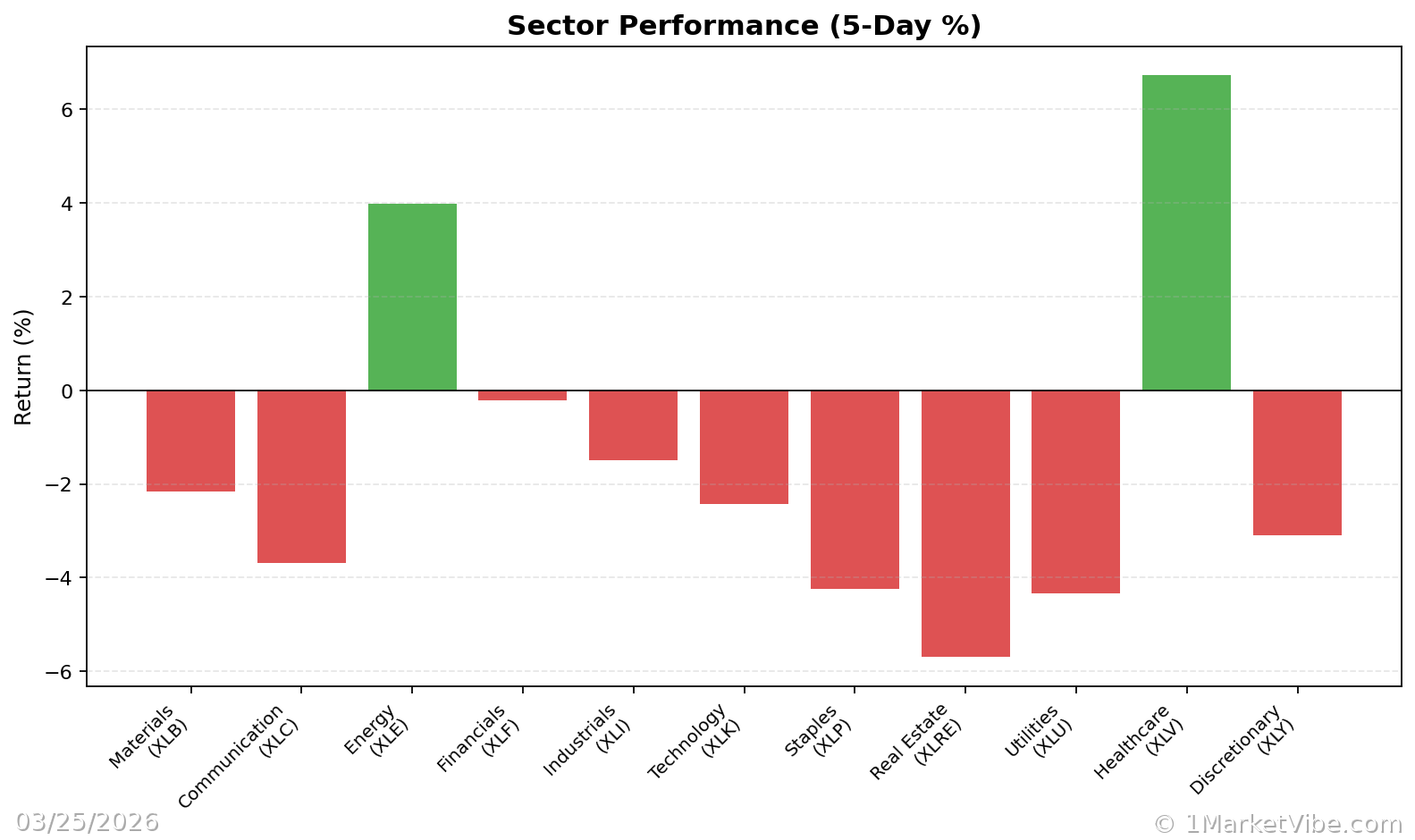
- Sector Rotation: Energy sectors may outperform, while sectors sensitive to input costs, like transportation, may underperform.
- Inflation Hedging: Traders might consider commodities or inflation-protected securities as hedges against rising prices.
How MarketVibe Metrics Illuminate the Situation
MarketVibe provides a suite of metrics that help traders decode market conditions. Let's explore how these metrics can offer insights into the current oil price surge.
Crash Warning Index (CWI)
The Crash Warning Index (CWI) is a composite measure that assesses risk by evaluating breadth, volatility, and defensive behavior in the market. It helps traders gauge the likelihood of significant market corrections.
- Construction: CWI combines data on market breadth (e.g., % Above 50-DMA), volatility (e.g., ATR%), and defensive sector performance.
- Daily Movement: CWI fluctuates based on changes in these underlying components, reflecting shifts in market risk sentiment.
% Above 50-DMA
The % Above 50-DMA is a breadth indicator that measures the percentage of stocks trading above their 50-day moving average. It provides insights into the overall health of market trends.
- Construction: This metric is calculated by dividing the number of stocks above their 50-DMA by the total number of stocks in the index.
- Daily Movement: Influenced by individual stock movements, it reflects the market's trend strength or weakness.
ATR%
The ATR% (Average True Range Percentage) measures market volatility relative to price. It indicates how much a security's price is moving on average, relative to its price level.
- Construction: ATR% is derived by dividing the ATR by the current price, providing a normalized measure of volatility.
- Daily Movement: Changes with fluctuations in price volatility, often increasing during periods of market stress.
Interpreting Market Conditions with These Metrics
Understanding the levels and interactions of these metrics can provide valuable insights into current market conditions.
Common Interpretations
- High CWI (Above 6): Indicates elevated risk, suggesting traders should be cautious and consider defensive strategies.
- Low % Above 50-DMA (Below 40%): Suggests market weakness and potential oversold conditions.
- High ATR%: Signals increased volatility, often associated with market uncertainty or stress.
Combinations to Watch
- Strong Breadth + Low Volatility: Typically indicates a stable, trending market.
- Weak Breadth + Rising Volatility: Often precedes market corrections or heightened risk periods.
- Defensive Sectors Leading: Suggests a risk-off environment where investors seek safety.
Real-World Scenarios
Let's explore how these metrics might manifest in real-world market scenarios:
Scenario 1: Topping Environment
Imagine a scenario where the market index continues to rise, but the % Above 50-DMA begins to decline. This divergence could indicate a weakening trend, even as the index appears strong. Traders might feel tempted to chase the rally, but a more informed view would suggest caution due to deteriorating breadth.
Scenario 2: Bullish Breakout
In a strong new bull leg, the % Above 50-DMA might surge above 70% and remain elevated. This scenario suggests robust market participation and trend strength. Traders could consider increasing exposure, provided their setups align with the broader trend.
Scenario 3: Volatility Spike
During a geopolitical crisis, such as the current Middle East unrest, ATR% might spike, indicating heightened volatility. The CWI could also rise, signaling increased risk. In this environment, traders might feel anxious about market stability. A more informed approach would involve tightening risk controls and possibly hedging against further volatility.
Incorporating Insights into a Trading Process
To effectively use these insights, traders should integrate them into a structured decision-making process:
- Risk Posture: Adjust risk exposure based on CWI levels. High CWI suggests a defensive stance, while low CWI might allow for more aggressive positioning.
- Breadth Confirmation: Use % Above 50-DMA to confirm trend strength before making significant portfolio changes.
- Volatility Awareness: Monitor ATR% to gauge market stability and adjust position sizes accordingly.
Common Misuses and Misconceptions
Traders often make mistakes when interpreting these metrics. Here are a few common pitfalls and healthier alternatives:
- Standalone Signal Misuse: Treating a single metric as a buy/sell signal. Instead, use them as part of a broader analysis.
- Ignoring Context: Focusing solely on metrics without considering sector rotation or macroeconomic factors. Always incorporate broader market context.
- Overreacting to Daily Changes: Making decisions based on one-day metric shifts. Look for sustained trends and patterns for more reliable insights.
To see these breadth and risk metrics in one place each day, you can use the Decision Edge dashboard at 1marketvibe.com.
This article is for informational purposes only and does not constitute financial advice. Always consult with a financial advisor before making investment decisions.