

Japan's Stock Rally and the Global Implications of the Nikkei's 58,000 Milestone
- Authors

- Name
- MarketVibe Team
- @1marketvibe
Japan's Stock Rally and the Global Implications of the Nikkei's 58,000 Milestone
Introduction
Japan's stock market has recently captured global attention as the Nikkei 225 index surpassed the 58,000 mark for the first time. This milestone is not just a numerical achievement but a reflection of broader economic and market dynamics that can have significant implications for global investors. Understanding these dynamics is crucial for traders looking to navigate the interconnected world of financial markets.
Election Impact
The recent surge in Japan's stock market can be attributed in part to the optimism surrounding the country's political landscape. Following recent elections, there has been a renewed sense of stability and potential for economic reforms, which has buoyed investor sentiment. This political backdrop provides a fertile ground for market growth, as it suggests a supportive environment for business and investment.
Stimulus Measures
Japan's government has also played a pivotal role in this market rally through substantial stimulus measures. The recent announcement of a $135 billion stimulus package has injected liquidity into the economy, supporting both consumer spending and corporate investment. Historically, such measures have been effective in boosting market confidence and driving stock prices higher. Comparing this to past stimulus efforts, the current package appears more targeted and timely, aligning with the needs of the post-pandemic recovery phase.
Global Market Implications
The implications of Japan's stock performance extend beyond its borders. As one of the world's largest economies, Japan's market movements can influence global investment strategies and financial flows. For instance, a strong Japanese market can lead to shifts in currency valuations, impacting U.S. yields and global interest rate expectations. Investors globally may need to reassess their portfolios, considering the potential for increased capital flows into Japanese equities.
Investor Strategies
In response to the Nikkei's rise, investors are adopting various strategies. Some are increasing their exposure to Japanese stocks, betting on continued growth. Others are more cautious, considering potential risk factors such as geopolitical tensions or shifts in global economic conditions. It's essential for investors to weigh these factors carefully, balancing the potential for gains with the inherent risks of an evolving market landscape.
CW Index Connection
A key tool in understanding the risk environment surrounding Japan's stock rally is the Crash Warning Index (CWI). This composite metric assesses several dimensions of market risk, including breadth, volatility, and defensive behavior. Currently, the CWI stands at 6.2, indicating elevated risk levels. This reading suggests that while the market is experiencing a robust rally, there is also a heightened potential for corrections. Traders should interpret this as a signal to remain vigilant and possibly adjust their risk exposure.
Real-World Scenarios
Scenario 1: Topping Environment
Imagine a scenario where the Nikkei continues to rise, but underlying breadth begins to deteriorate. This could manifest as fewer stocks participating in the rally, even as the index climbs higher. In such a case, the % Above 50-DMA might decline, signaling weakening trend health. Traders might feel tempted to chase the rally, but a more informed approach would be to monitor breadth closely and prepare for potential reversals.
Scenario 2: Strong Bull Leg
Conversely, if the % Above 50-DMA surges and remains elevated, it could indicate a strong new bull leg. In this environment, traders might see broad participation across sectors, suggesting a healthy market trend. Here, increasing exposure could be justified, provided that individual setups align with broader market conditions.
Scenario 3: Volatility Spike
A sudden increase in ATR% could indicate a volatility spike, often associated with market instability. If this coincides with a rising CWI, it might suggest that the market is entering a more turbulent phase. Traders should consider defensive strategies, such as reducing position sizes or employing hedging techniques.
How to Use This Insight in a Process
To effectively incorporate these insights into a trading process, consider the following guidelines:
- When breadth is weak and CWI is high, emphasize defensive strategies and reduce new risk exposure.
- When breadth and leadership broaden out, be more open to adding exposure, but ensure that your setups are robust.
- Use the Market Dashboard as a high-level regime label, then check internals for confirmation before making decisions.
Common Misuses & Misconceptions
Traders often misuse market metrics by:
- Treating them as stand-alone entry signals: Metrics like CWI or % Above 50-DMA should inform risk posture, not dictate specific trades.
- Ignoring context: It's crucial to consider sector rotation and broader market conditions when interpreting these metrics.
- Overreacting to one-day changes: Short-term fluctuations can be noise; focus on sustained trends and patterns.
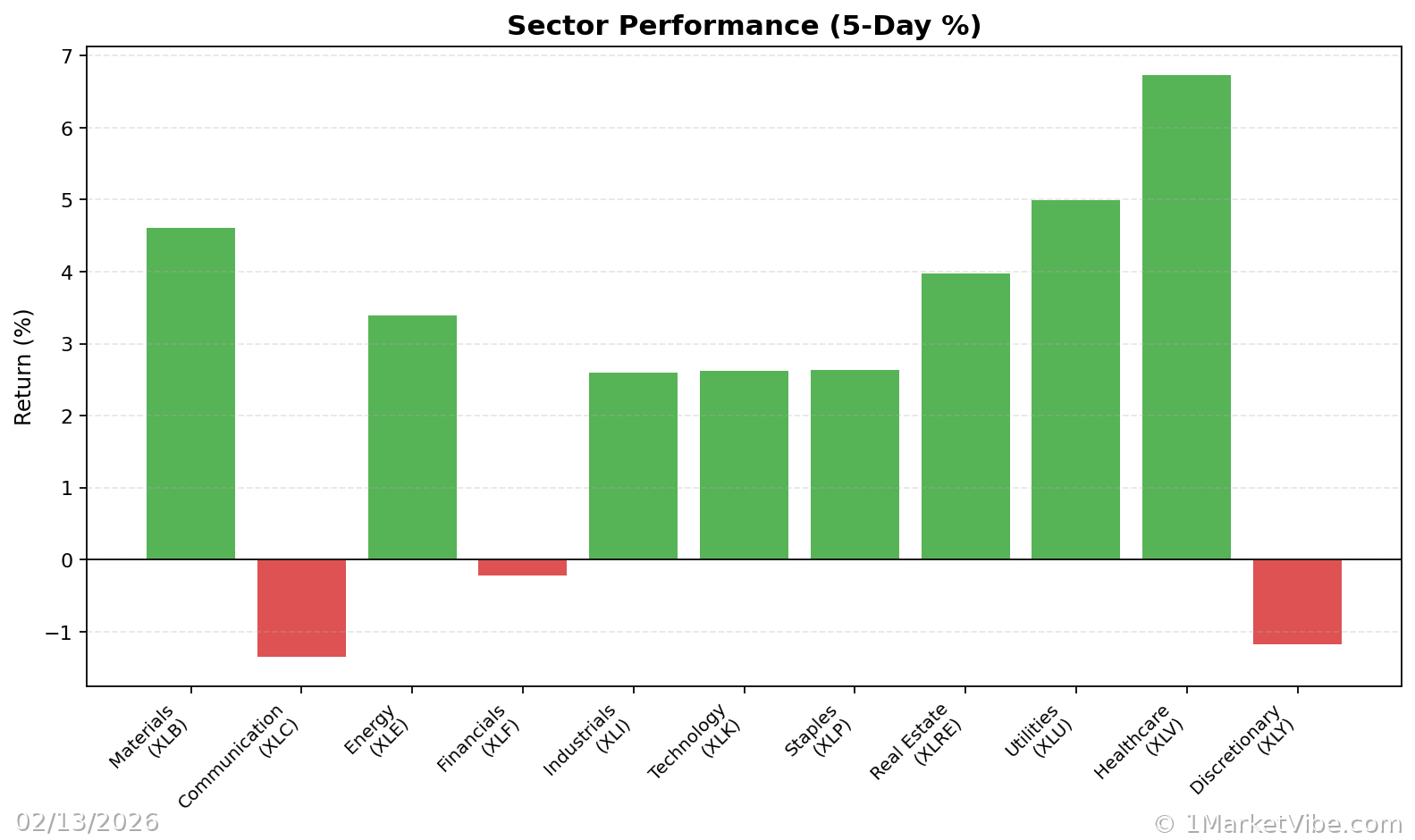
To see these breadth and risk metrics in one place each day, you can use the Decision Edge dashboard at 1marketvibe.com.
Disclaimer: This article is for informational purposes only and should not be considered as financial advice. Always conduct your own research or consult a financial advisor before making investment decisions.