

Impact of US Strikes on Iran on Oil Prices and Investments
- Authors

- Name
- MarketVibe Team
- @1marketvibe
Introduction
In the complex world of trading, geopolitical events can have profound impacts on market dynamics. The recent US strikes on Iran have created ripples across global markets, particularly affecting oil prices and related investments. Understanding how these events influence market conditions is crucial for traders who aim to navigate volatility and adjust their strategies effectively. In this article, we will explore the impact of these geopolitical tensions on oil prices and investments, using MarketVibe's metrics as a guiding framework.
Geopolitical Context
Geopolitical events, such as military strikes, often lead to heightened uncertainty in financial markets. The recent US strikes on Iran have raised concerns about potential disruptions in oil supply, given Iran's significant role in the global oil market. This uncertainty can lead to increased volatility and shifts in investor sentiment, making it essential for traders to assess the broader market implications.
Impact on Oil Prices
Oil prices are highly sensitive to geopolitical tensions, especially when they involve major oil-producing regions. The fear of supply disruptions can lead to a spike in oil prices as traders anticipate potential shortages. This can have a cascading effect on various sectors, particularly those heavily reliant on oil, such as transportation and manufacturing.
Current CW Index Analysis
The Crash Warning Index (CWI) is a valuable tool for assessing market risk in the face of geopolitical events. The CWI is a composite metric that incorporates several risk dimensions, including market breadth, volatility, and defensive behavior. Currently, the CWI stands at 4.8, indicating elevated risk levels. This suggests that traders should be cautious and consider defensive strategies, as the market may be more susceptible to corrections.
Inflation Concerns
Rising oil prices can contribute to inflationary pressures, as higher energy costs often translate into increased prices for goods and services. This can impact consumer spending and overall economic growth. Traders should monitor inflation indicators closely, as persistent inflation can influence central bank policies and interest rates, further affecting market conditions.
Sector Vulnerabilities
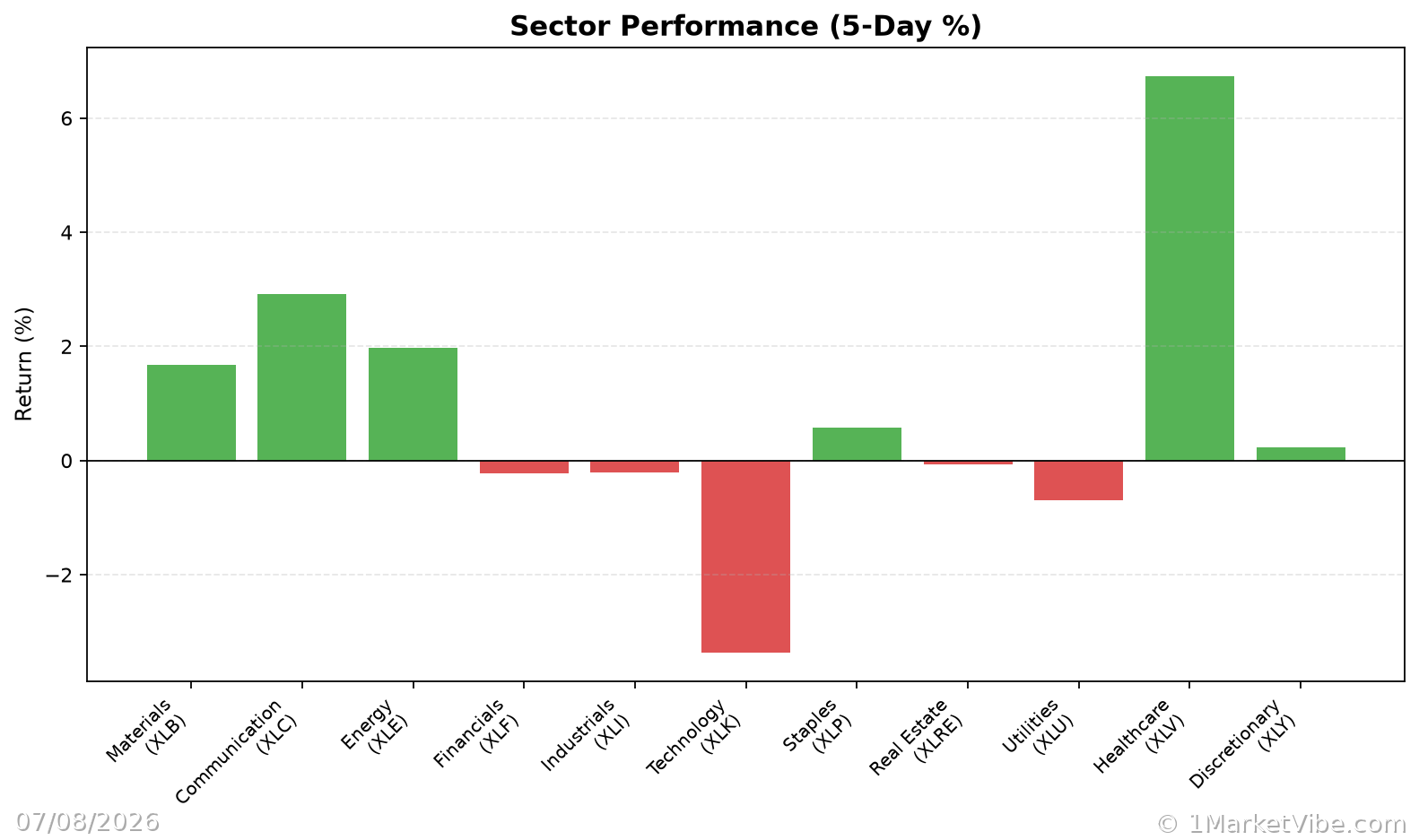
Different sectors respond differently to geopolitical tensions and rising oil prices. For instance, the energy sector may benefit from higher oil prices, while sectors like transportation and consumer goods may face headwinds due to increased costs. MarketVibe's Sector Scores can help traders identify which sectors are showing strength or weakness, allowing for more informed investment decisions.
Investment Strategies
In light of the current geopolitical tensions and market conditions, traders should consider the following strategies:
- Monitor Position Sizing: Given the elevated CWI, it may be prudent to reduce exposure to high-risk assets and focus on sectors with strong fundamentals.
- Adjust Risk Exposure: Consider reallocating investments towards defensive sectors, such as utilities and consumer staples, which tend to perform better during periods of uncertainty.
- Consider Hedging Strategies: If the CWI continues to trend upwards, implementing hedging strategies, such as options or inverse ETFs, can help mitigate potential losses.
Conclusion
Geopolitical events like the US strikes on Iran can significantly impact oil prices and investments. By leveraging MarketVibe's metrics, such as the CWI and Sector Scores, traders can gain valuable insights into market risk and sector performance. This knowledge can inform better process decisions, helping traders navigate volatility and adjust their strategies accordingly.
To see these breadth and risk metrics in one place each day, you can use the Decision Edge dashboard at 1marketvibe.com.
INVESTMENT DISCLAIMER: This analysis is provided for informational purposes only and does not constitute investment advice, a recommendation, or an offer or solicitation to buy or sell any securities. MarketVibe content reflects observable market data and historical context as of the publication date and should not be construed as personalized advice.