

Global Stocks Decline: Implications of the CW Index at 7.7 for Investors
- Authors

- Name
- MarketVibe Team
- @1marketvibe
Global Stocks Decline: Implications of the CW Index at 7.7 for Investors
In the ever-evolving landscape of global markets, understanding the underlying risk conditions can be crucial for making informed investment decisions. One of the tools that MarketVibe provides to help traders navigate these complexities is the Crash Warning Index (CWI). With the CWI currently at 7.7, it's essential to explore what this means for investors, especially in light of recent global stock declines.
What is the Crash Warning Index (CWI)?
The Crash Warning Index (CWI) is a composite metric designed to provide an early warning of heightened market risk. It aggregates several dimensions of market behavior, including breadth, volatility, and defensive sector performance, to assess the overall risk environment. Traders should care about the CWI because it helps inform decisions about risk exposure, highlights potential blind spots in market sentiment, and fits into a structured process for evaluating market conditions rather than serving as a standalone signal.
How the CWI Works
The CWI is constructed by combining various market indicators:
- Breadth: Measures the number of stocks advancing versus declining. A market with weak breadth might see fewer stocks participating in upward moves, even if indices are rising.
- Volatility: Assessed through metrics like the Average True Range (ATR%), which measures price volatility relative to price.
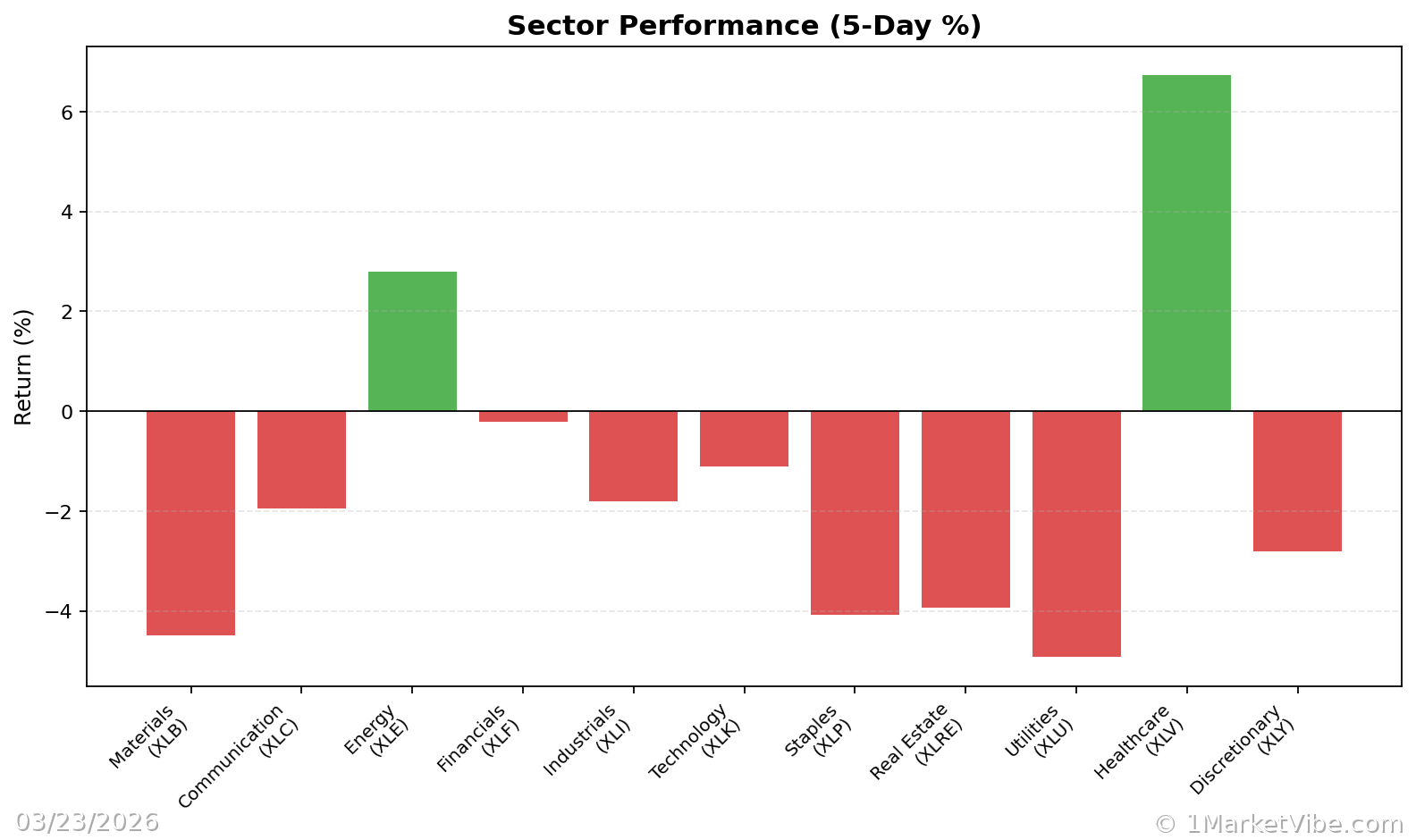
- Defensive Behavior: Observes the performance of traditionally defensive sectors like utilities and consumer staples compared to the broader market.
The CWI moves based on changes in these underlying components. For example, if market breadth deteriorates while volatility increases, the CWI is likely to rise, indicating higher risk.
Interpreting the CWI
Ranges and Regimes:
- CWI below 3: Generally indicates a stable market environment with lower risk.
- CWI between 3 and 6: Suggests caution as risk levels are rising.
- CWI above 6: Signals elevated risk, where corrections or increased volatility are more likely.
When the CWI is above 6, as it is now at 7.7, it suggests that the market is in a high-risk regime. This level indicates that investors should be particularly vigilant about potential corrections or increased volatility.
Common Combinations:
- Weak Breadth + Rising Volatility: Often a precursor to market corrections.
- Defensive Sectors Leading: Indicates a shift towards risk aversion among investors.
Real-World Scenarios
Scenario 1: Topping Environment
Imagine a scenario where major indices are reaching new highs, but the number of stocks making new highs is dwindling. Here, the CWI might rise as breadth weakens, even if the market appears strong on the surface. Traders might feel tempted to chase the rally, but a more informed view would suggest caution due to the underlying weakness.
Scenario 2: Volatility Spike
Consider a sudden geopolitical event that causes a spike in volatility. The ATR% would increase, contributing to a higher CWI. In such cases, traders might panic and sell indiscriminately. However, understanding the CWI's warning could prompt a more measured response, such as reassessing risk exposure and considering hedging strategies.
Scenario 3: Bull Leg with Strong Breadth
In a strong new bull leg, the % Above 50-DMA might surge, indicating robust market participation. If the CWI remains low during this period, it suggests a healthy market environment where adding exposure could be justified, provided individual setups align.
How to Use This Insight in a Process
- Emphasize Defense: When the CWI is high, prioritize defensive strategies and reduce new risk exposure.
- Monitor Breadth and Leadership: If breadth and leadership broaden, consider increasing exposure, but only if setups are favorable.
- Use Market Dashboard: Leverage the Market Dashboard to understand the broader regime and confirm internal market conditions.
Common Misuses & Misconceptions
Treating CWI as a Standalone Signal: The CWI should not be used in isolation. It is a guide to risk posture, not a precise timing tool.
Ignoring Context: Traders often overlook sector rotation or broader economic factors that might influence the CWI's implications.
- Overreacting to One-Day Changes: The CWI is more meaningful when viewed over several days or weeks, rather than reacting to daily fluctuations.
By understanding and integrating the CWI into a broader market analysis framework, traders can make more informed decisions about risk management and exposure.
To see these breadth and risk metrics in one place each day, you can use the Decision Edge dashboard at 1marketvibe.com.
Disclaimer: This article is for informational purposes only and does not constitute financial advice. Please consult with a financial advisor before making any investment decisions.