

CW Index at 7.07 and the Impact of Rising Oil Prices on Inflation Concerns
- Authors

- Name
- MarketVibe Team
- @1marketvibe
CW Index at 7.07 and the Impact of Rising Oil Prices on Inflation Concerns
In today's financial landscape, understanding the interplay between macroeconomic factors and market indicators is crucial for informed decision-making. One such indicator, the Crash Warning Index (CWI), currently stands at 7.07, signaling heightened market risk. This article explores how rising oil prices contribute to inflation concerns and how the CWI can guide traders in navigating these challenges.
Orientation – What Are We Explaining?
The Crash Warning Index (CWI) is a composite metric designed to provide an early warning of potential market corrections. It integrates several dimensions of market risk, including breadth, volatility, and defensive behavior. Traders should pay attention to the CWI because it helps identify periods of elevated risk, allowing them to adjust their strategies accordingly. Rather than serving as a magic signal, the CWI is a tool for enhancing a structured trading process by highlighting potential blind spots.
How It Works – Mechanics & Data
The CWI is constructed by analyzing various market risk factors:
- Breadth: Measures the proportion of stocks advancing versus declining. A narrow breadth indicates fewer stocks are driving market gains, often a precursor to corrections.
- Volatility: Assessed through metrics like the Average True Range (ATR%), which measures price volatility relative to price levels.
- Defensive Behavior: Observes the performance of defensive sectors (e.g., utilities, consumer staples) relative to the broader market.
The CWI moves based on changes in these underlying components. For instance, a surge in volatility or a contraction in market breadth can push the index higher, indicating increased risk.
Interpretation – What Different Levels Tend to Mean
CWI Ranges and Implications:
- Below 3: Low risk, typically a stable market environment.
- 3 to 6: Moderate risk, suggesting caution but not immediate danger.
- Above 6: High risk, where corrections become more likely.
When the CWI is above 6, as it is now at 7.07, traders should be vigilant. This level suggests that the market is experiencing significant stress, often due to external factors like rising oil prices.
Real-World Scenarios – How This Shows Up in Markets
Scenario 1: Topping Environment
Imagine a scenario where major indices are reaching new highs, but the breadth is narrowing. The CWI rises above 6, indicating that fewer stocks are participating in the rally. Traders might feel tempted to chase the highs, but the CWI suggests caution. A more informed approach would be to reduce exposure and prepare for potential volatility.
Scenario 2: Volatility Spike
Consider a period where geopolitical tensions lead to a spike in oil prices, increasing market volatility. The ATR% rises, and the CWI follows suit, climbing above 7. Traders might panic and sell indiscriminately. However, understanding the CWI's warning allows them to strategically hedge positions and manage risk.
Scenario 3: Defensive Leadership
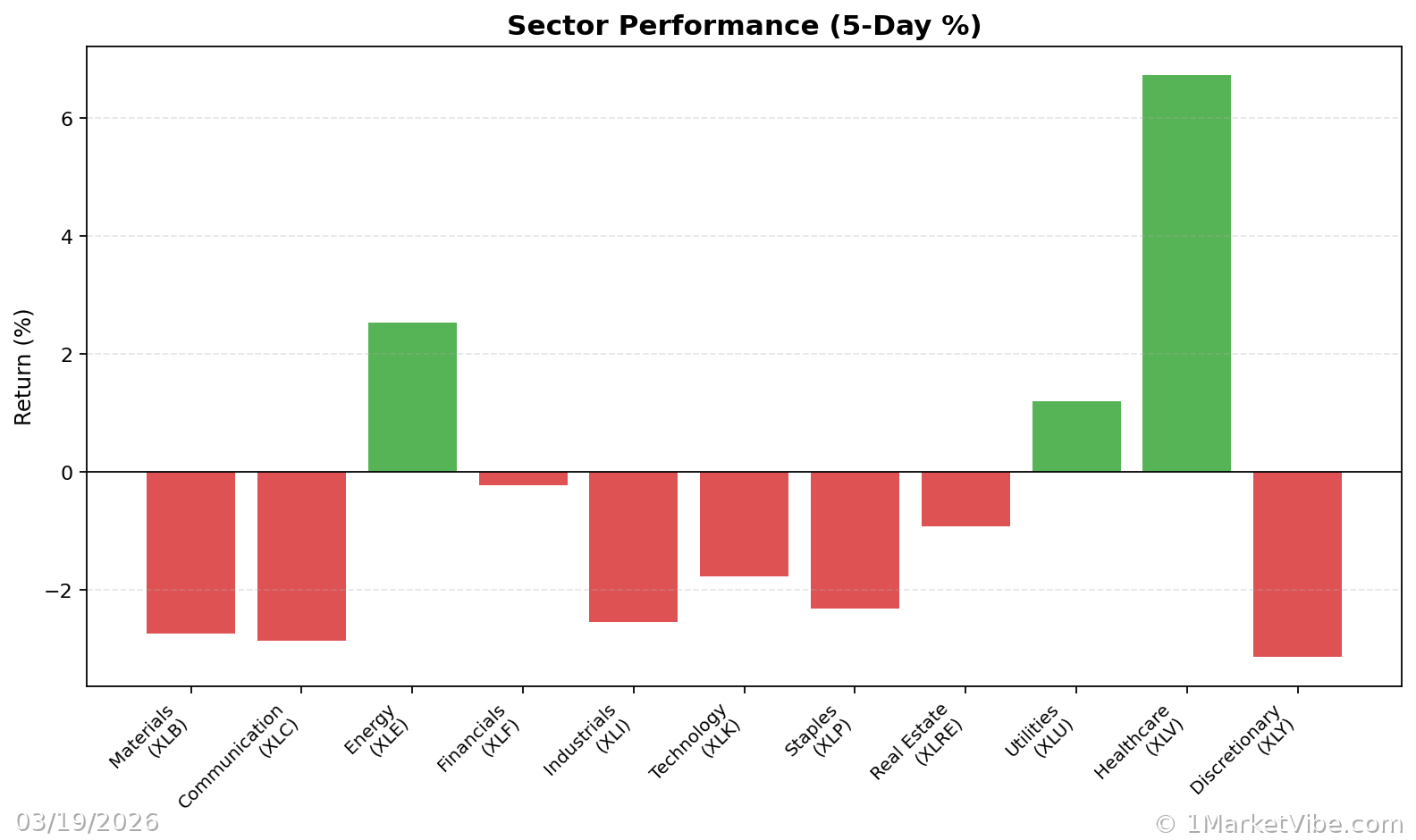
In a market where defensive sectors start outperforming, the CWI remains elevated. This shift indicates a flight to safety, often preceding broader market declines. Traders can use this insight to rotate into defensive stocks, aligning their portfolios with the prevailing risk environment.
How to Use This Insight in a Process
To incorporate the CWI into a trading process:
- Emphasize Defense: When the CWI is high, prioritize capital preservation. Consider reducing new risk and focusing on defensive sectors.
- Monitor Breadth and Volatility: Use the Market Dashboard to track these metrics. A combination of weak breadth and high volatility suggests a cautious stance.
- Adjust Exposure: Be open to adding exposure when breadth improves and volatility subsides, provided your setups align with the broader market context.
Common Misuses & Misconceptions
Treating CWI as a Stand-Alone Signal: Some traders mistakenly use the CWI as a direct buy/sell signal. Instead, it should guide overall risk posture.
Ignoring Context: The CWI should be interpreted alongside other indicators, such as sector rotation and macroeconomic trends, to provide a comprehensive view.
- Overreacting to One-Day Changes: The CWI is more meaningful when trends persist over several days. Avoid making hasty decisions based on short-term fluctuations.
To see these breadth and risk metrics in one place each day, you can use the Decision Edge dashboard at 1marketvibe.com.
Disclaimer: This article is for informational purposes only and does not constitute financial advice. Please consult with a financial advisor before making any investment decisions.