
Strait of Hormuz Closure Expected to Drive Oil Prices Higher This Summer
- Authors

- Name
- MarketVibe Team
- @1marketvibe
Strait of Hormuz Closure Expected to Drive Oil Prices Higher This Summer
The Strait of Hormuz, a critical chokepoint for global oil supply, is facing a prolonged closure that could significantly impact oil prices this summer. As tensions escalate in the region, MarketVibe's proprietary Enhanced CW Index, a 0-10 scale that provides a 4-6 week early warning of market corrections by tracking institutional gold flows and market breadth, is currently at 5.7. This reading is below the 7.0 warning threshold, indicating moderate risk but suggesting that investors should remain vigilant.
Recent reports from Piper Sandler indicate that the Strait of Hormuz could remain closed for several months, potentially driving crude oil prices to new highs. This development aligns with MarketVibe's CW Index signals, which have historically provided early warnings of market shifts. For instance, when the CW Index hit 7.1 in March 2023, markets fell 8.3% over the following month. Investors can learn more about how the CW Index works and track its movements in real-time at 1marketvibe.com.
Current Market Conditions
The potential closure of the Strait of Hormuz is already influencing oil price trends. West Texas Intermediate (WTI) crude futures, which neared $120 a barrel during the onset of the conflict, are currently trading around $94. However, with the strait's closure, prices are expected to surge, possibly surpassing previous highs. This scenario underscores the importance of MarketVibe's 4-6 week early warning system, which suggests that investors should prepare for potential market volatility.
Economic Implications
A prolonged disruption in oil supply could lead to significant economic consequences. Crude oil prices may reach unprecedented levels, impacting inflation rates and consumer spending. As energy costs rise, businesses could face increased operational expenses, leading to margin compression and reduced profitability. MarketVibe's CW Index at 5.7 indicates that while immediate risk is moderate, the situation warrants close monitoring.
Sector Vulnerabilities
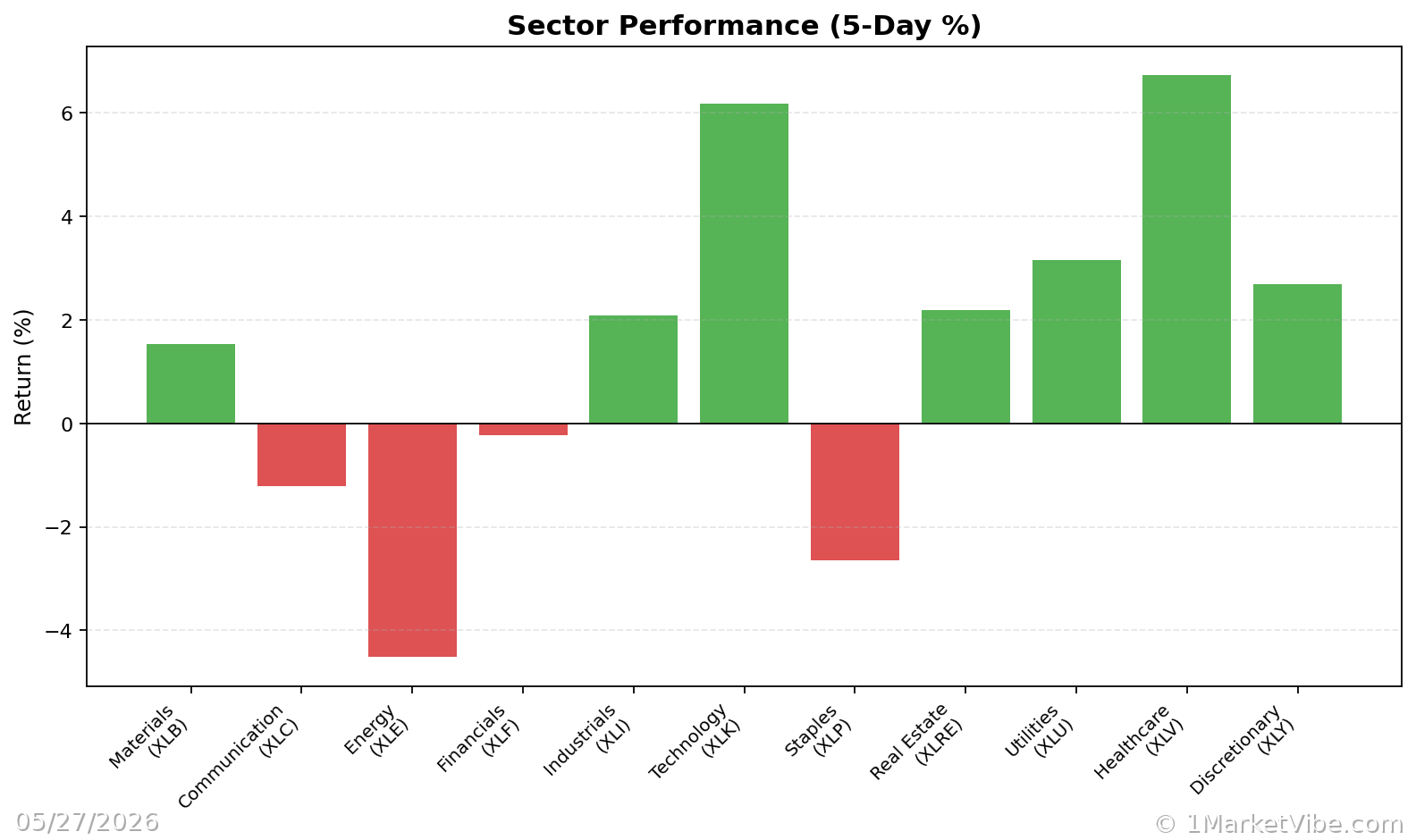
Several sectors are particularly vulnerable to rising oil prices. The transportation and logistics industries, heavily reliant on fuel, could experience increased costs, affecting their bottom lines. Additionally, sectors such as manufacturing and retail may face higher input costs, leading to potential price hikes for consumers. MarketVibe tracks these sectoral impacts, providing investors with actionable insights to navigate these challenges.
Global Supply Chain Effects
The closure of the Strait of Hormuz could disrupt global supply chains, affecting international trade and logistics. With a significant portion of the world's oil supply passing through this narrow passage, any prolonged disruption could lead to shortages and increased transportation costs. MarketVibe's proprietary system highlights the importance of monitoring these developments, as they could have far-reaching implications for global markets.
Market Sentiment and CW Index
Market sentiment remains cautious as the CW Index reading of 5.7 suggests moderate risk. Historical patterns show that similar disruptions have led to significant market corrections. For example, during the Gulf War, oil prices surged, leading to economic slowdowns in several regions. Investors should watch for any upward movement in the CW Index, particularly if it approaches the 6.5 level, which could signal increased market volatility.
Investor Considerations
Investors navigating the current market landscape should consider several strategies to manage risk. Diversifying portfolios and adjusting exposure to vulnerable sectors can help mitigate potential losses. Additionally, hedging strategies, such as options or futures contracts, may provide protection against rising oil prices. MarketVibe's Enhanced CW Index offers valuable insights for making informed investment decisions.
MarketVibe Decision Edge™: Your Action Plan
MarketVibe's Decision Edge™ Method simplifies complex market signals into three clear steps: Glance → Learn → Act. This proprietary framework helps investors turn market intelligence into actionable decisions.
🔍 Glance (10-Second Takeaway)
- Current CW Index reading: 5.7, indicating moderate risk.
- Overall market status: Yellow flag.
- Key metric to watch: CW Index movement towards 6.5.
📚 Learn (2-Minute Deep Dive)
The potential closure of the Strait of Hormuz presents significant risks to global oil supply and economic stability. Historical parallels, such as the Gulf War, highlight the potential for oil price surges and economic slowdowns. MarketVibe's CW Index provides a 4-6 week early warning, allowing investors to anticipate market shifts. Monitoring geopolitical developments and their impact on oil prices is crucial for informed decision-making.
⚡ Act (Specific Steps)
- Diversify Portfolios: Reduce exposure to sectors heavily reliant on oil.
- Hedge Against Rising Prices: Consider options or futures contracts to protect against oil price volatility.
- Monitor CW Index: Adjust investment strategies if the CW Index approaches 6.5.
- Risk Management: Implement stop-loss orders to limit potential losses.
Access MarketVibe's full Decision Edge framework at 1marketvibe.com →
Conclusion
The potential long-term impacts of the Strait of Hormuz closure underscore the importance of proactive risk management. By leveraging MarketVibe's Enhanced CW Index and Decision Edge™ Method, investors can navigate these challenges with confidence. As developments unfold, monitoring market responses and adjusting strategies accordingly will be crucial for maintaining portfolio stability.
Disclaimer: This article is for informational purposes only and does not constitute financial advice. Market conditions can change rapidly, and past performance is not indicative of future results.