


S&P 500 Declines as Oil Prices Surge
The S&P 500 experienced a notable decline on Monday, closing 0.39% lower at 6,343.72. This marks the third consecutive losing session for the index, driven primarily by rising oil prices and significant drops in the technology sector. As oil prices continue to climb, investors are closely monitoring the market's reaction and potential implications for broader economic conditions.
Market Reaction
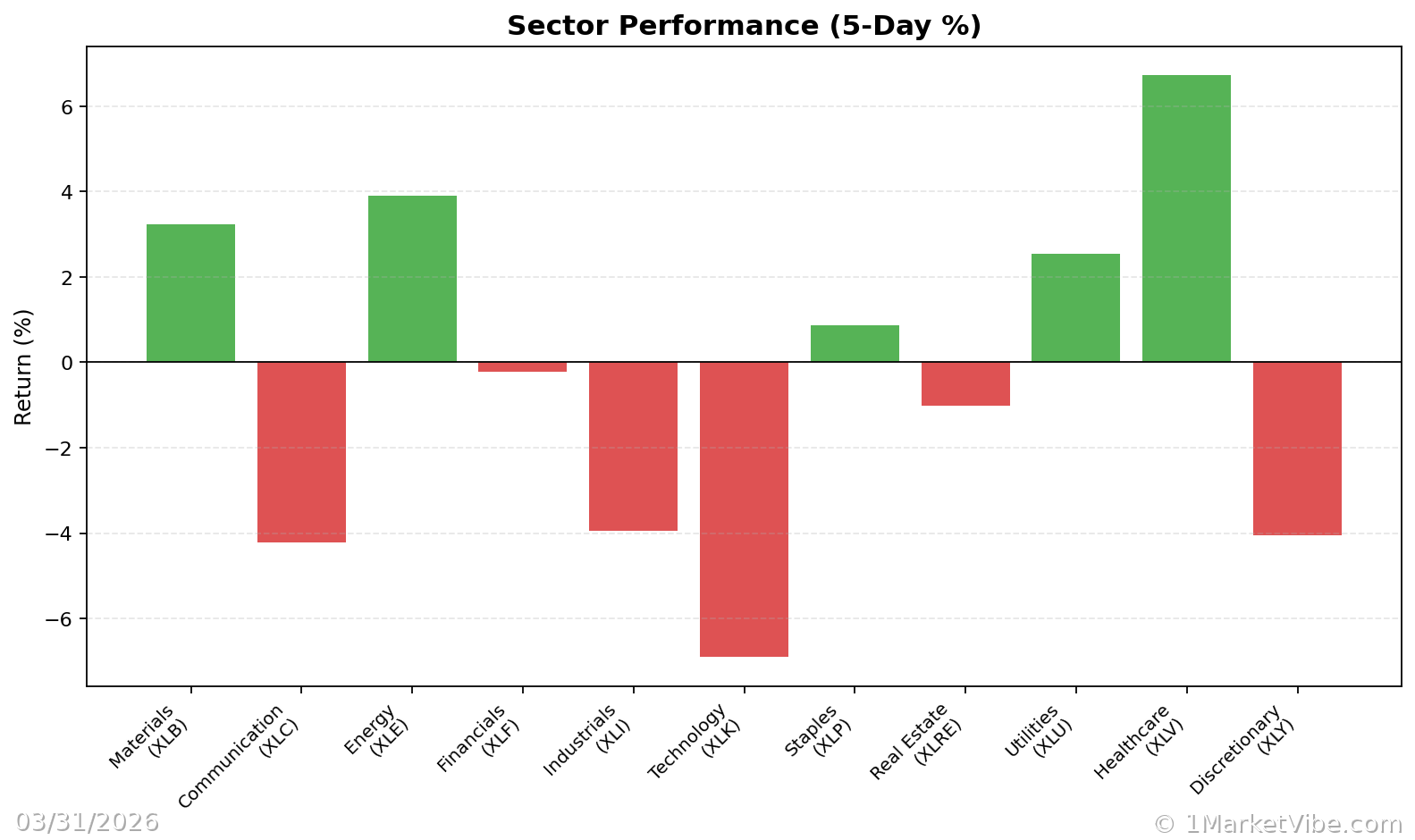
The recent performance of the S&P 500 reflects the market's sensitivity to fluctuating commodity prices, particularly oil. The technology sector, a significant component of the index, saw a decline of over 1%, contributing to the overall downturn. Conversely, sectors such as financials and utilities managed to post gains, highlighting a mixed market response. According to MarketVibe's proprietary Enhanced CW Index, currently at 5.7, the risk remains moderate, staying below the critical 7.0 warning threshold. This index, which provides a 4-6 week early warning of market corrections by tracking institutional gold flows and market breadth, suggests that while caution is warranted, immediate panic is not necessary. Learn more about how CW Index works at 1marketvibe.com.
Oil Price Trends
Oil prices have surged, with West Texas Intermediate futures closing at $102.88 per barrel, marking its highest level since July 2022. Brent crude futures also saw a slight increase, reaching $112.78 per barrel. This surge is driven by geopolitical tensions and supply chain disruptions, notably the ongoing conflict in Iran. Historically, such spikes in oil prices have led to increased volatility in equity markets, as seen when the CW Index hit 7.1 in March 2023, resulting in an 8.3% market decline over the following month.
Sector Analysis
The impact of rising oil prices is felt across various sectors. The consumer and industrial sectors, in particular, are vulnerable to increased costs, which can lead to reduced profit margins and lower consumer spending. The technology sector's recent decline underscores the broader market's sensitivity to these fluctuations. MarketVibe's CW Index suggests that investors should remain vigilant, especially if the index approaches the 6.5 level, which could signal heightened risk.
CW Index Insights
MarketVibe's Enhanced CW Index, currently at 5.7, continues to provide valuable insights into market conditions. The index's gold component offers a unique 4-6 week early warning, allowing investors to anticipate potential market corrections. Historical patterns demonstrate the index's predictive capabilities, as seen in past market downturns. Investors should monitor the CW Index closely, particularly if it trends towards the 6.5 threshold, which could indicate an increased likelihood of market volatility.
Investor Sentiment
Investor sentiment remains cautious amid the current market environment. While the CW Index indicates moderate risk, the ongoing rise in oil prices and geopolitical tensions contribute to a neutral outlook. Investors are advised to stay informed and consider potential adjustments to their portfolios in response to these developments.
MarketVibe Decision Edge™: Your Action Plan
MarketVibe's Decision Edge™ Method simplifies complex market signals into three clear steps: Glance → Learn → Act. This proprietary framework is designed to turn market intelligence into actionable decisions.
🔍 Glance (10-Second Takeaway)
- Current CW Index reading: 5.7, indicating moderate risk.
- Overall market status: Yellow flag, suggesting caution.
- Key metric to watch: Oil prices and CW Index movements.
📚 Learn (2-Minute Deep Dive)
The current market scenario is heavily influenced by rising oil prices, which have historically led to increased market volatility. The Enhanced CW Index, with its gold flow component, provides a critical early warning system, allowing investors to anticipate potential market corrections. The index's current reading of 5.7 suggests that while risk is present, it remains below the critical warning threshold. Investors should remain vigilant, particularly if geopolitical tensions escalate or if the CW Index trends towards the 6.5 level.
⚡ Act (Specific Steps)
Monitor Portfolio Allocations:
- Adjust exposure to sectors sensitive to oil price fluctuations, such as technology and consumer goods.
- Consider increasing allocations to sectors like utilities and financials, which have shown resilience.
Risk Management:
- Implement hedging strategies to mitigate potential losses if the CW Index approaches the 6.5 threshold.
- Maintain a diversified portfolio to spread risk across various asset classes.
Stay Informed:
- Regularly check MarketVibe's CW Index updates for real-time insights.
- Keep abreast of geopolitical developments that could impact oil prices and market stability.
Access MarketVibe's full Decision Edge framework at 1marketvibe.com →
Conclusion
In summary, the S&P 500's recent decline highlights the market's sensitivity to rising oil prices and geopolitical tensions. MarketVibe's Enhanced CW Index, currently at 5.7, provides a valuable early warning system, helping investors navigate these uncertain times. By leveraging MarketVibe's Decision Edge™ Method, investors can make informed decisions and adjust their strategies accordingly. As always, staying informed and proactive is key to managing risk and capitalizing on market opportunities.
Disclaimer: This article is for informational purposes only and does not constitute financial advice. Always consult with a financial advisor before making investment decisions.