
S&P 500 Decline and the Implications of Rising Yields for Investors
- Authors

- Name
- MarketVibe Team
- @1marketvibe
S&P 500 Decline and the Implications of Rising Yields for Investors
The S&P 500 has experienced a notable decline, closing lower for the third consecutive session, as rising bond yields exert pressure on the market. This trend is raising concerns among investors about potential economic implications. MarketVibe's proprietary Enhanced CW Index, a 0-10 scale that provides a 4-6 week early warning of market corrections by tracking institutional gold flows and market breadth, is currently at 5.9. This reading is below the 7.0 warning threshold, indicating a moderate risk environment. However, the current market conditions warrant close attention as yield dynamics evolve.
Learn more about how CW Index works at 1marketvibe.com
Current Market Trends
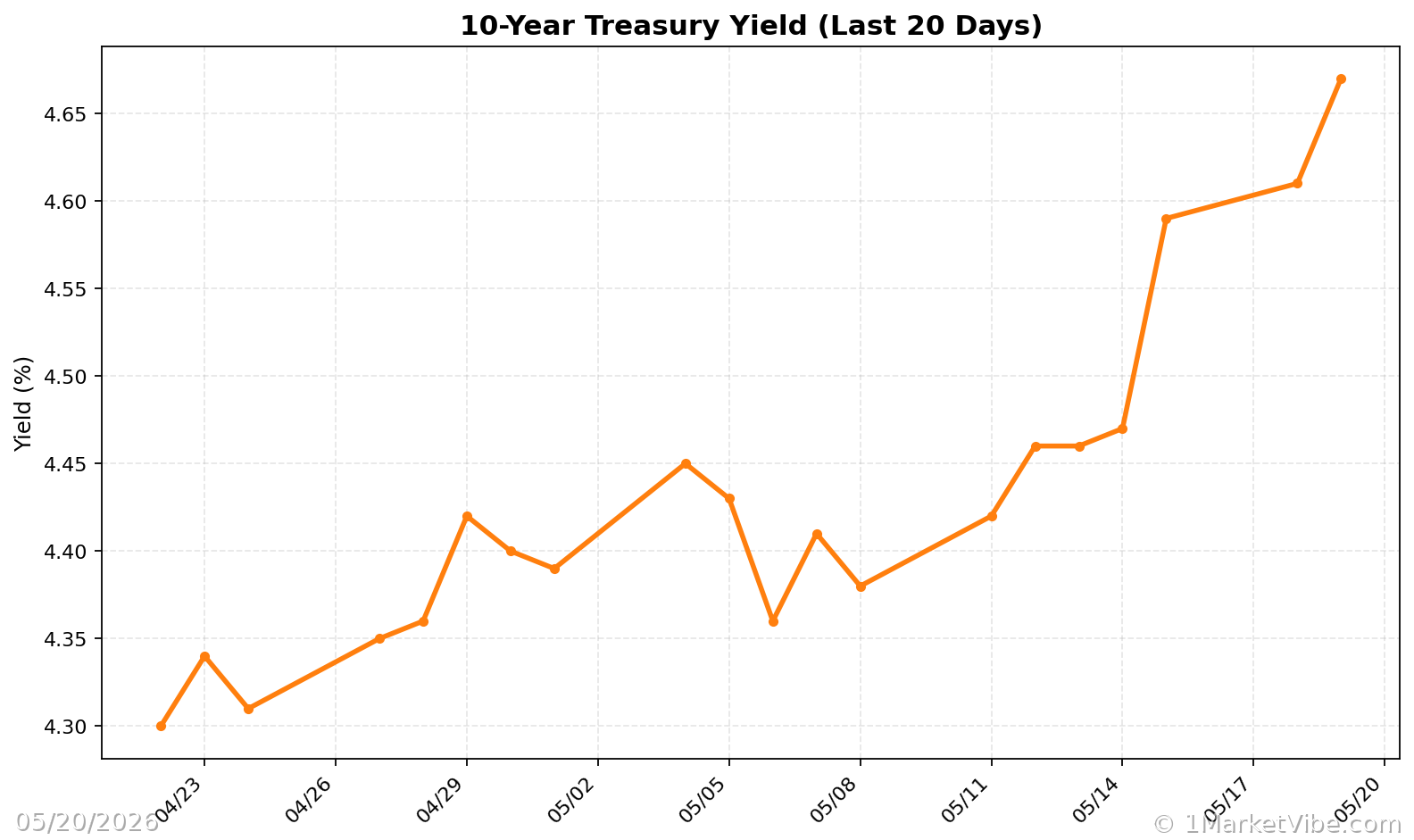
The S&P 500's recent performance reflects broader market unease, with the index closing down 0.67% at 7,353.61. The Nasdaq Composite and Dow Jones Industrial Average also posted losses, down 0.84% and 0.65%, respectively. This downturn is largely attributed to the surge in bond yields, with the 30-year Treasury yield reaching 5.19%, its highest level in nearly two decades. The 10-year Treasury note yield also rose to 4.687%, marking a significant increase since January 2025.
MarketVibe's CW Index suggests that while the current reading is moderate, investors should be vigilant. Historically, when the CW Index hit 7.1 in March 2023, markets fell 8.3% over the following month. This underscores the importance of monitoring the index for any upward movement towards the warning threshold.
Yield Dynamics
The rise in yields is driven by investor concerns over inflation and potential Federal Reserve policy adjustments. Higher yields increase borrowing costs, potentially curbing consumer spending and impacting economic growth. This scenario is compounded by geopolitical tensions, such as the recent developments in Iran, which have influenced oil prices and, consequently, inflation expectations.
The CW Index at 5.9 indicates that while immediate risk is moderate, the gold component of the index provides a crucial early warning system, offering investors a 4-6 week advance notice of potential market corrections.
Economic Implications
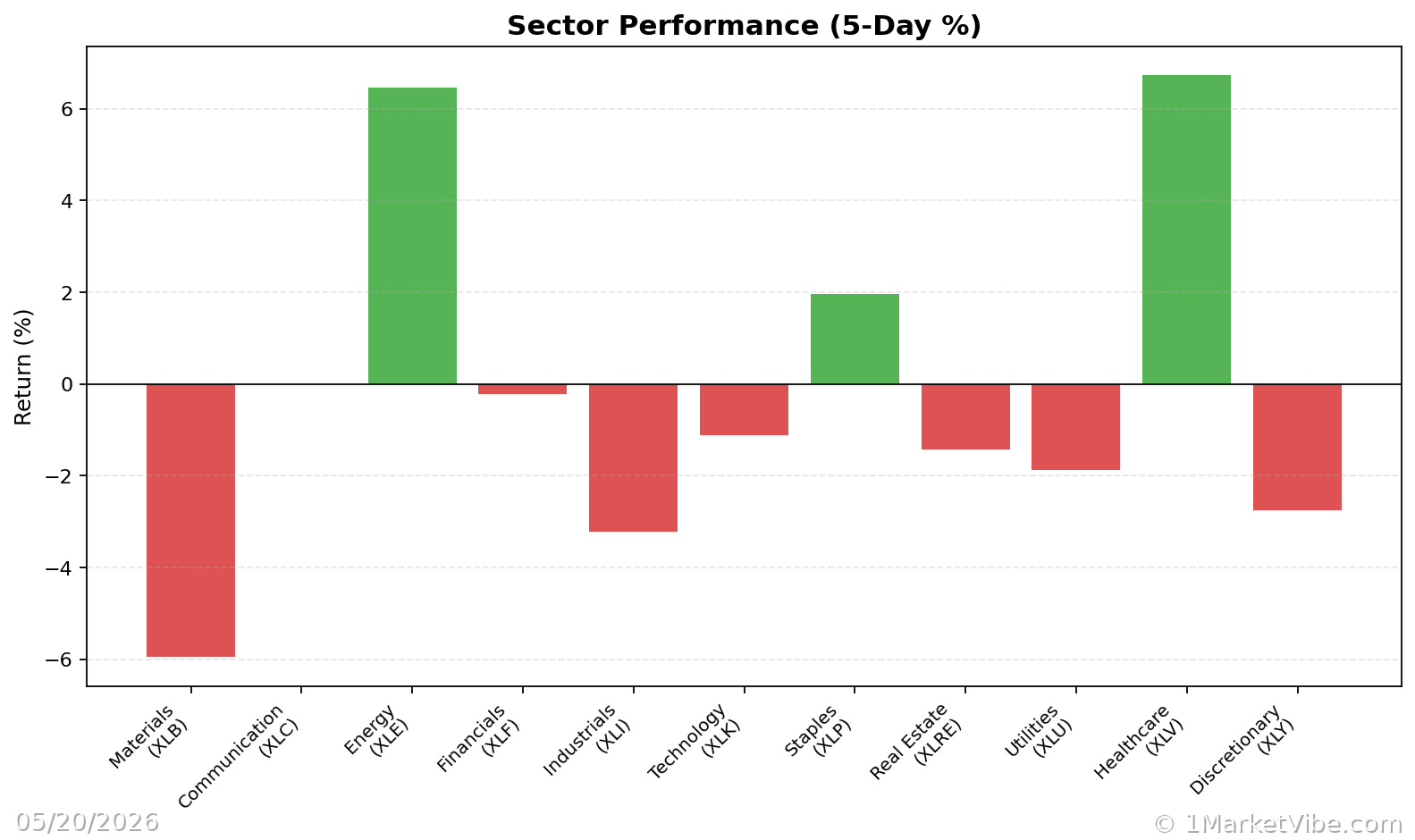
The implications of rising yields extend beyond immediate market reactions. Increased borrowing costs can dampen consumer spending, affecting sectors reliant on consumer credit, such as housing and automotive. Additionally, high yields can challenge the valuations of growth stocks, particularly in the technology sector, which has been a significant driver of market gains.
MarketVibe tracks these developments closely, emphasizing the need for investors to remain informed and prepared to adjust their portfolios accordingly.
Market Sentiment
Investor sentiment is currently cautious, with many market participants wary of the Federal Reserve's next moves. The appointment of Kevin Warsh as the new Fed Chairman adds another layer of uncertainty, as markets often test new leadership. This environment of heightened vigilance is reflected in the CW Index, which, while not at a critical level, suggests that investors should stay alert to any changes.
According to MarketVibe data, the current market sentiment aligns with historical patterns where rising yields have prompted market corrections. The Enhanced CW Index's gold component continues to provide valuable insights into potential shifts in market dynamics.
MarketVibe Decision Edge™: Your Action Plan
MarketVibe's Decision Edge™ Method simplifies complex market signals into three clear steps: Glance → Learn → Act. This proprietary framework is designed to turn market intelligence into actionable decisions.
🔍 Glance (10-Second Takeaway)
- Current CW Index reading: 5.9, indicating moderate risk.
- Overall market status: Yellow flag, suggesting caution.
- Key metric to watch: Bond yields and their impact on market sentiment.
📚 Learn (2-Minute Deep Dive)
The current market scenario is reminiscent of past periods where rising yields signaled economic caution. Historically, such conditions have led to market corrections, as evidenced by the March 2023 downturn following a CW Index reading of 7.1. Investors should monitor key economic indicators, including inflation data and Federal Reserve communications, to anticipate potential shifts.
The significance of the current situation lies in its potential to disrupt long-term growth trajectories. With the CW Index providing a 4-6 week early warning, investors have the opportunity to adjust their strategies proactively. The gold component of the index remains a critical factor, offering insights into institutional sentiment and market breadth.
⚡ Act (Specific Steps)
- Diversify Portfolios: Consider reducing exposure to sectors sensitive to interest rate hikes, such as technology and consumer discretionary.
- Hedge Against Volatility: Utilize options or other hedging strategies to protect against potential market downturns.
- Monitor CW Index Movements: If the CW Index approaches or exceeds 6.5, reassess risk exposure and consider defensive allocations.
- Stay Informed: Regularly review economic indicators and MarketVibe updates to stay ahead of market trends.
Access MarketVibe's full Decision Edge framework at 1marketvibe.com →
Conclusion
The recent decline in the S&P 500, driven by rising yields, highlights the importance of staying informed and prepared. MarketVibe's Enhanced CW Index provides a critical early warning system, helping investors navigate uncertain market conditions. By leveraging MarketVibe's proprietary tools, investors can make informed decisions and manage risk effectively.
Disclaimer: This article is for informational purposes only and does not constitute financial advice. Always consult with a financial advisor before making investment decisions.