Nvidia's 5% Decline and Its Implications for Chip Stocks
- Authors

- Name
- MarketVibe Team
- @1marketvibe
Nvidia's 5% Decline and Its Implications for Chip Stocks
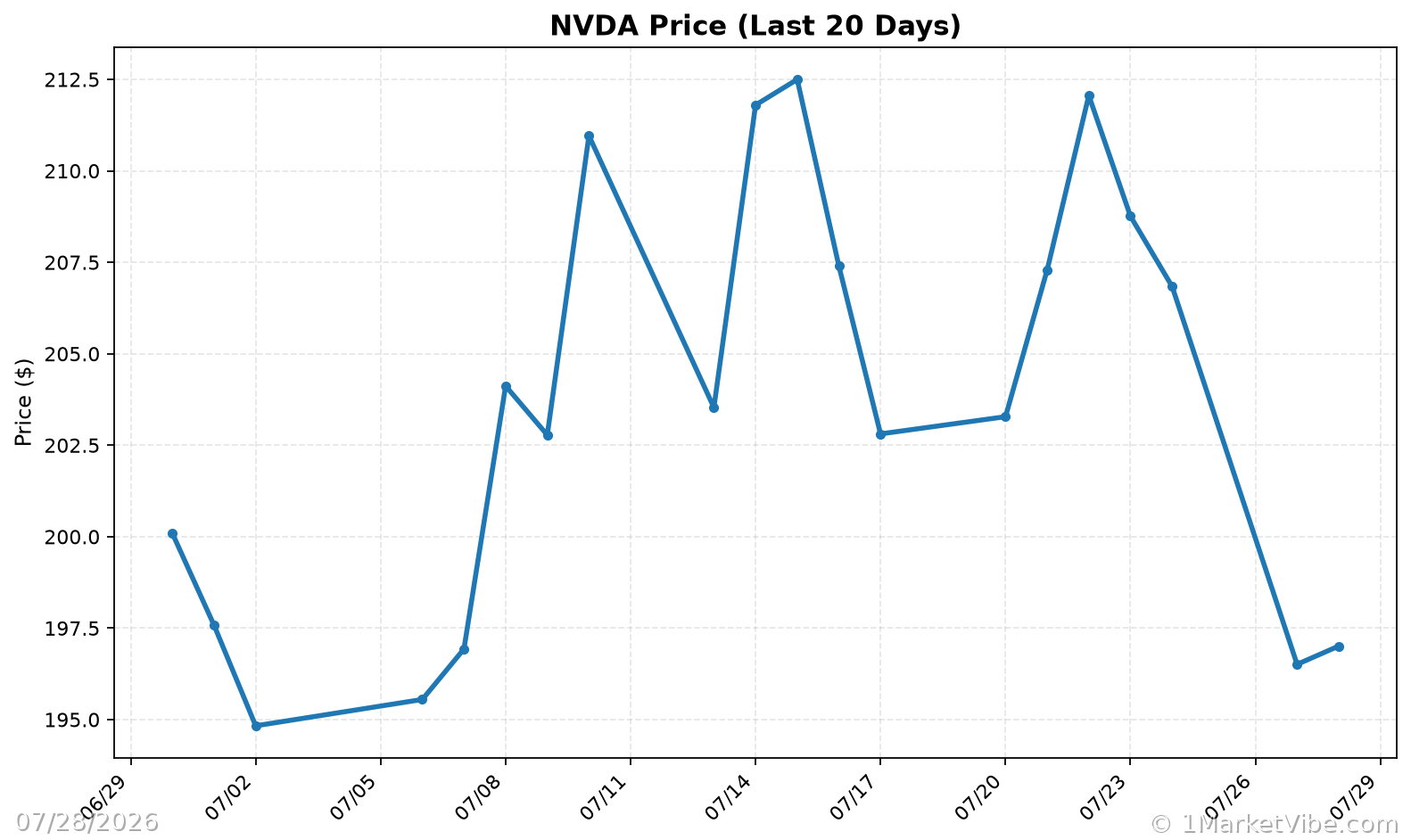
Nvidia's recent stock performance has sent ripples through the technology sector, particularly impacting chip stocks. On July 28, 2026, Nvidia's shares fell nearly 5%, a move that has raised concerns about the broader implications for the chip industry. This decline comes amid growing fears of circular financing within the AI sector, which has further unsettled investors.
MarketVibe's proprietary Enhanced CW Index, a 0-10 scale that provides a 4-6 week early warning of market corrections by tracking institutional gold flows and market breadth, is currently at 4.4. This reading is below the 7.0 warning threshold, indicating moderate risk but suggesting that the market's current volatility was somewhat predictable. Learn more about how the CW Index works at 1marketvibe.com.
Nvidia's Impact on the Chip Sector
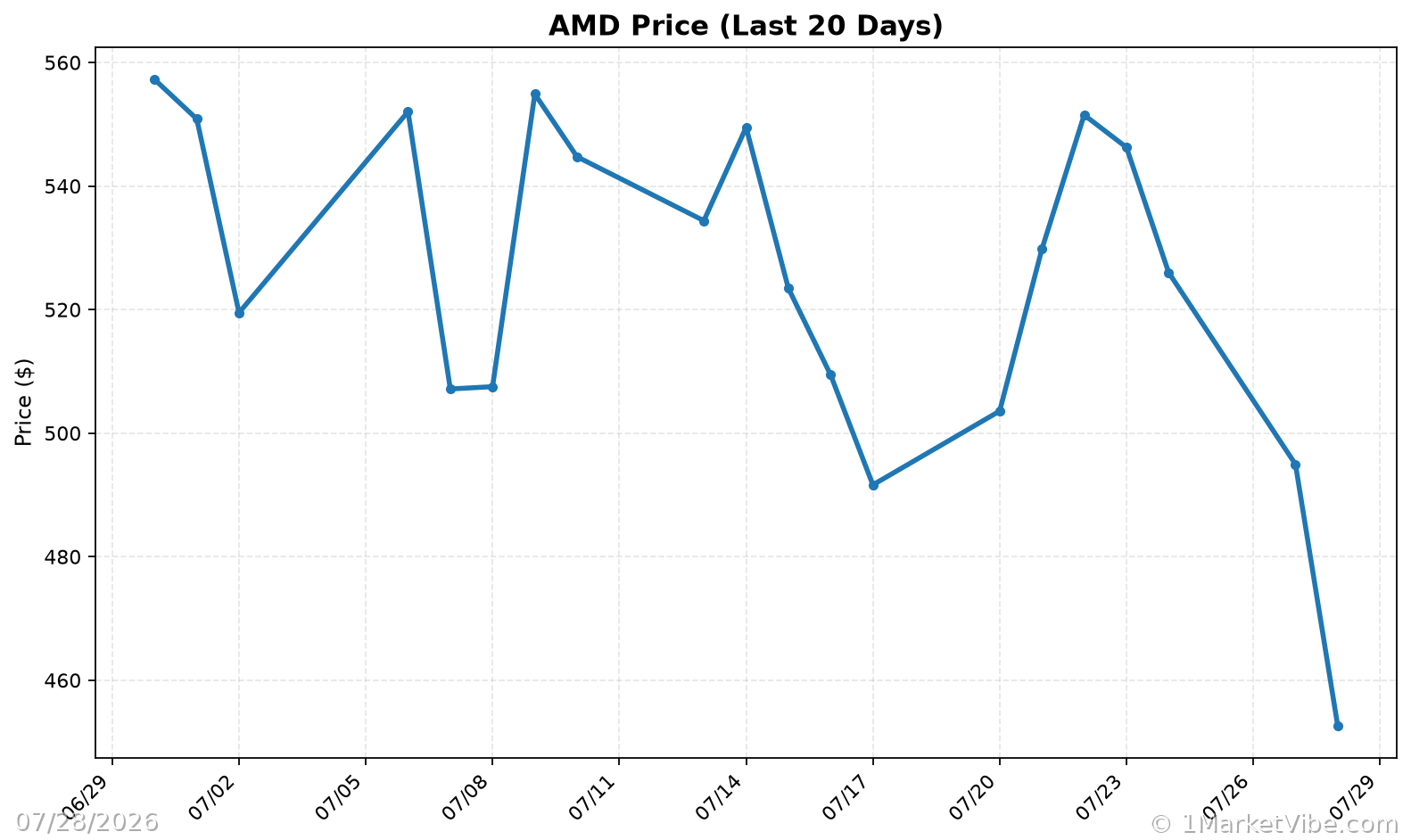
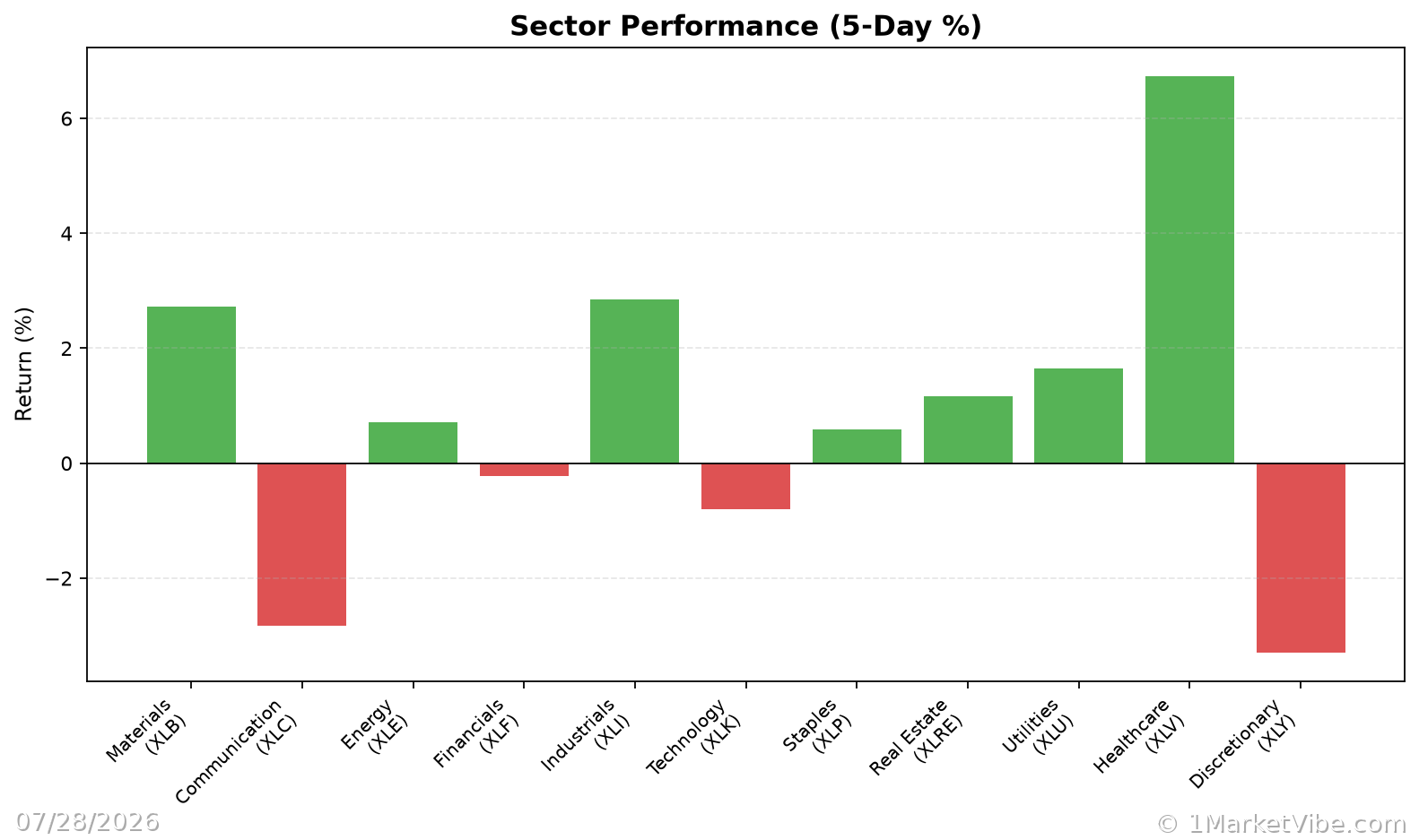
Nvidia's nearly 5% drop has significantly influenced the chip sector, with peer companies like AMD also experiencing declines of over 5%. Memory-chip makers such as Micron and SK Hynix saw their stocks fall by more than 2% and 7%, respectively. This downturn reflects investor sentiment that is increasingly cautious, especially as Nvidia's performance often serves as a bellwether for the sector.
The decline is partly attributed to concerns over Nvidia's involvement in a potential $250 billion funding backstop for OpenAI, raising fears of circular financing. Such arrangements, where suppliers are major investors in their customers, can distort market dynamics and inflate valuations, leading to increased market scrutiny.
AI Circular Financing Concerns
Circular financing in the AI industry poses significant risks, as it can lead to inflated valuations and unsustainable growth. Nvidia's strategic moves, including a collaboration with SK Group on a $500 billion initiative, have heightened these concerns. The potential for over-leveraging and increased debt obligations is causing anxiety among investors, who are wary of the long-term viability of such financing structures.
These concerns are not isolated to Nvidia. The broader chip sector is feeling the pressure as investors question the sustainability of AI infrastructure spending. The Enhanced CW Index suggests that these developments align with historical patterns of market corrections, emphasizing the need for vigilance.
Memory-Chip Market Reaction
The memory-chip market is also reacting to competitive pressures, notably from Chinese rival CXMT's IPO, which has impacted companies like Micron and SK Hynix. This development underscores the competitive landscape in the memory-chip sector, where new entrants can quickly shift market dynamics.
MarketVibe's CW Index highlights the importance of monitoring these shifts, as the index's gold component provides a 4-6 week early warning of potential market corrections. Historical patterns show that when the CW Index reached 7.1 in March 2023, markets fell 8.3% over the following month.
Market Sentiment Analysis
Current market sentiment remains neutral, with the CW Index at 4.4 indicating moderate risk. While this is below the critical 7.0 threshold, it suggests that investors should remain cautious. The potential for increased volatility is evident, particularly if the CW Index trends upward toward the warning level.
MarketVibe's data shows that shifts in institutional gold flows and market breadth are key indicators to watch. If the CW Index crosses 6.5, it could signal a heightened risk of market corrections, necessitating strategic adjustments.
Investor Considerations
For investors navigating the current tech stock volatility, it is crucial to monitor Nvidia's performance as a market indicator. The company's influence on the chip sector cannot be understated, and any further declines could exacerbate market instability.
MarketVibe's Enhanced CW Index provides valuable insights into potential market shifts, offering a strategic advantage for investors. By tracking these signals, investors can make informed decisions to mitigate risk and capitalize on opportunities.
MarketVibe Decision Edge™: Your Action Plan
MarketVibe's Decision Edge™ Method simplifies complex market signals into three clear steps: Glance → Learn → Act. This proprietary framework turns market intelligence into actionable decisions.
🔍 Glance (10-Second Takeaway)
- CW Index Reading: 4.4, indicating moderate risk.
- Market Status: Yellow flag, suggesting caution.
- Key Metric: Institutional gold flows and market breadth.
📚 Learn (2-Minute Deep Dive)
Nvidia's decline highlights broader market risks, particularly in the chip sector. The company's involvement in circular financing arrangements raises concerns about inflated valuations and potential debt obligations. Historical parallels show that similar market conditions have led to corrections, as evidenced by the CW Index's past readings.
Investors should monitor developments in the AI sector, especially regarding infrastructure spending and competitive pressures from new market entrants like CXMT. The current situation underscores the importance of strategic vigilance, as the CW Index's early warning capability suggests potential market shifts.
⚡ Act (Specific Steps)
- Diversify Holdings: Consider reducing exposure to high-risk tech stocks by reallocating 10-15% of your portfolio to more stable sectors.
- Monitor CW Index: Keep a close eye on the CW Index. If it trends toward 6.5, consider hedging strategies to protect against potential downturns.
- Adjust Risk Exposure: For aggressive investors, maintain a watchful stance on Nvidia and related stocks. For conservative investors, prioritize capital preservation by limiting exposure to volatile sectors.
Access MarketVibe's full Decision Edge framework at 1marketvibe.com →
Conclusion
Nvidia's recent decline has significant implications for the chip market, highlighting the need for strategic vigilance. The Enhanced CW Index provides a critical early warning system, helping investors navigate potential market corrections. As the market continues to grapple with AI financing concerns and competitive pressures, staying informed and proactive is essential.
Disclaimer: This article is for informational purposes only and does not constitute financial advice. Always consult with a financial advisor before making investment decisions.
Charts