
Middle East Conflict Pushes Oil Prices Above $90 and Heightens Inflation Risks
- Authors

- Name
- MarketVibe Team
- @1marketvibe
Middle East Conflict Pushes Oil Prices Above $90 and Heightens Inflation Risks
The ongoing conflict in the Middle East has once again underscored the volatile nature of global energy markets. As tensions escalate, oil prices have surged past the $90 mark, raising concerns about potential inflationary pressures. This geopolitical development is a critical factor for investors to consider, as it could have far-reaching implications for market stability and economic growth.
Current Oil Price Surge
Oil prices have breached the $90 threshold, driven by the intensifying conflict in the Middle East. This surge reflects market anxieties about potential disruptions to oil supply chains, which are crucial for global economic stability. Historically, such geopolitical tensions have led to significant market volatility, as seen during previous conflicts in the region.
MarketVibe's proprietary Enhanced CW Index, a 0-10 scale that provides a 4-6 week early warning of market corrections by tracking institutional gold flows and market breadth, is currently at 5.1. This reading, while below the critical 7.0 warning threshold, indicates moderate risk and suggests that investors should remain vigilant. MarketVibe's CW Index suggests that while immediate panic is unwarranted, the situation requires close monitoring. Learn more about how CW Index works at 1marketvibe.com.
Market Volatility Indicators
The CW Index at 5.1 is a crucial indicator of the current market sentiment. Historically, when the CW Index approached higher levels, such as 7.1 in March 2023, markets experienced an 8.3% decline over the following month. This historical pattern underscores the importance of the CW Index as a predictive tool for investors. The gold component of the CW Index, which provides a 4-6 week advance notice, is particularly valuable in anticipating market shifts driven by geopolitical events.
Historical Context
Geopolitical tensions have repeatedly influenced oil prices and market dynamics. For instance, during the Gulf War in the early 1990s, oil prices surged, leading to increased inflation and economic uncertainty. Similarly, the 2003 Iraq War saw oil prices spike, impacting global markets. The current situation bears similarities to these past events, suggesting that investors should prepare for potential market turbulence.
Potential Economic Impacts
Rising oil prices can have a cascading effect on the global economy. Higher energy costs often translate into increased production and transportation expenses, which can lead to broader inflationary pressures. This scenario could affect consumer behavior, as higher prices for goods and services may dampen spending. According to MarketVibe data, sectors heavily reliant on energy, such as transportation and manufacturing, are particularly vulnerable to these shifts.
Sector Responses
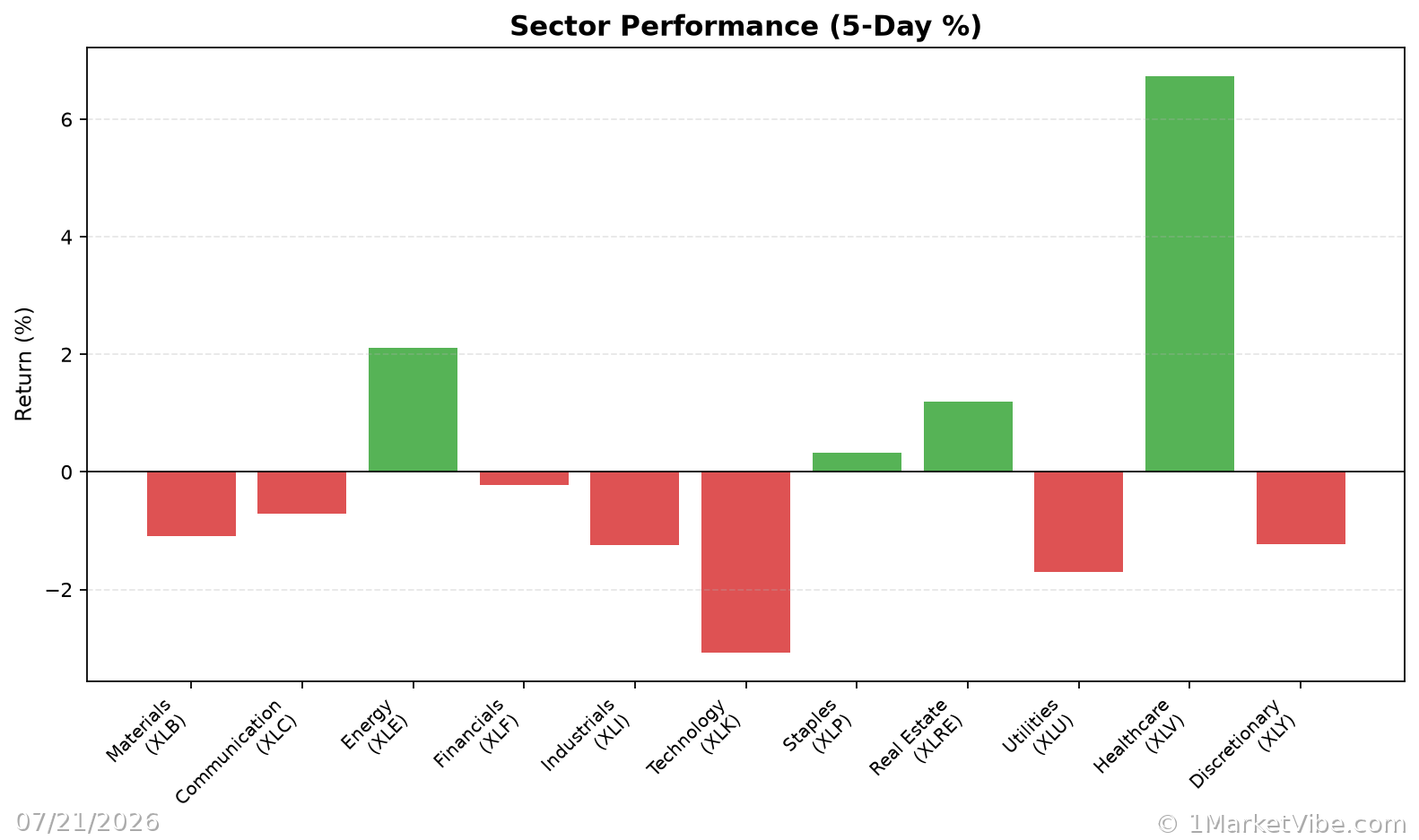
Different sectors are responding variably to the rising oil prices. The technology sector, for instance, may face increased operational costs, while the energy sector could see short-term gains. Investor sentiment is also shifting, with some seeking refuge in traditionally safer assets like gold, which MarketVibe tracks as part of its CW Index. Understanding these sector-specific responses is crucial for making informed investment decisions.
Risk Awareness
While the current market conditions warrant attention, it's essential to avoid overreacting to short-term fluctuations. MarketVibe's proprietary system emphasizes the importance of a measured approach, focusing on long-term trends rather than immediate market noise. Monitoring ongoing developments and adjusting strategies accordingly can help mitigate risks.
MarketVibe Decision Edge™: Your Action Plan
MarketVibe's Decision Edge™ Method simplifies complex market signals into three clear steps: Glance → Learn → Act. This is MarketVibe's proprietary framework for turning market intelligence into actionable decisions.
🔍 Glance (10-Second Takeaway)
- Current CW Index reading: 5.1, indicating moderate risk.
- Overall market status: Yellow flag.
- Key metric to watch: Oil price movements and CW Index trends.
📚 Learn (2-Minute Deep Dive)
The current geopolitical tensions in the Middle East have pushed oil prices above $90, a level that historically signals potential market volatility. The CW Index's reading of 5.1 suggests that while the immediate risk is moderate, investors should remain alert to further developments. Past instances, such as the Gulf War and the 2003 Iraq conflict, have shown that such tensions can lead to prolonged market instability and inflationary pressures.
Monitoring the CW Index is crucial, as its gold component provides a 4-6 week early warning of potential market corrections. If the CW Index trends towards the 6.5 mark, it could signal an increased likelihood of market downturns, necessitating strategic adjustments.
⚡ Act (Specific Steps)
- Diversify Portfolios: Consider increasing exposure to sectors less affected by oil price volatility, such as technology and healthcare.
- Hedge Against Inflation: Utilize commodities like gold, which MarketVibe tracks, to hedge against potential inflationary pressures.
- Adjust Risk Exposure: If the CW Index approaches 6.5, consider reducing positions in high-risk sectors like transportation and manufacturing.
- Stay Informed: Regularly check MarketVibe's updates for real-time CW Index movements and insights.
Access MarketVibe's full Decision Edge framework at 1marketvibe.com →
Conclusion
The surge in oil prices due to Middle East tensions highlights the importance of staying informed and prepared. MarketVibe's Enhanced CW Index and Decision Edge™ Method provide investors with the tools needed to navigate these uncertain times effectively. By leveraging these insights, investors can make informed decisions that align with their risk tolerance and investment goals.
Disclaimer: This article is for informational purposes only and does not constitute financial advice. Always consult with a financial advisor before making investment decisions.