
Iran Sanctions Boost Oil Prices by 5%: Analyzing Market Risks and Opportunities
- Authors

- Name
- MarketVibe Team
- @1marketvibe
Iran Sanctions Boost Oil Prices by 5%: Analyzing Market Risks and Opportunities
The recent surge in oil prices, driven by U.S. sanctions on Iran, has sent ripples through global markets. As geopolitical tensions escalate, investors are keenly observing the potential impacts on their portfolios. MarketVibe's proprietary Enhanced CW Index, a 0-10 scale that provides a 4-6 week early warning of market corrections by tracking institutional gold flows and market breadth, is currently at 4.8. This level is below the 7.0 warning threshold, indicating moderate risk. However, the current geopolitical climate suggests that vigilance is warranted.
Learn more about how CW Index works at 1marketvibe.com.
Market Reaction
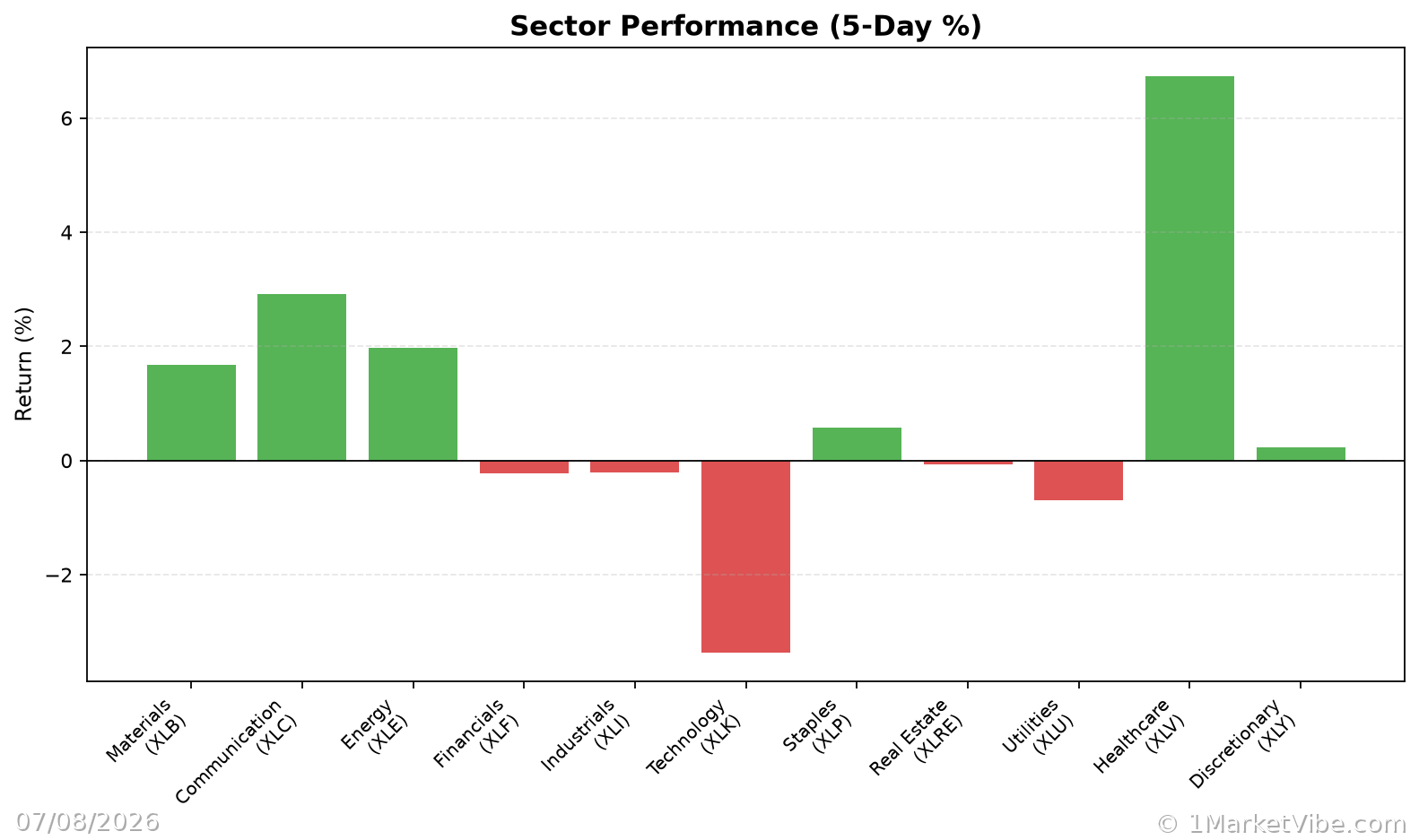
The U.S. stock markets have exhibited mixed reactions amid the rising oil prices. The Dow Jones Industrial Average fell by 0.2%, while the S&P 500 and Nasdaq Composite dropped by 0.5% and 1.2%, respectively. This decline follows a record-setting day on Wall Street, highlighting the volatility that geopolitical events can introduce. According to MarketVibe data, the oil price surge is a direct response to the U.S. revoking a sanctions waiver on Iranian oil sales, compounded by recent attacks on tankers in the Strait of Hormuz.
Geopolitical Context
The revocation of the sanctions waiver by the U.S. has significant implications for global oil supply. The Strait of Hormuz, a critical chokepoint for oil transportation, has seen increased military activity, raising concerns about potential supply disruptions. Historically, such geopolitical tensions have led to significant oil price fluctuations. For instance, when similar tensions arose in 2019, oil prices spiked by over 10% within weeks.
Market Volatility Factors
Geopolitical tensions are a key driver of market volatility, particularly in the energy sector. The Enhanced CW Index, with its gold component, provides a unique early warning system, suggesting that investors should be prepared for potential market corrections. Historical patterns show that when the CW Index hit 7.1 in March 2023, markets fell 8.3% over the following month. Investors should watch for any upward movement in the CW Index, especially if it approaches the 6.5 level, which could signal increased market risk.
CW Index Insights
The current CW Index reading of 4.8 suggests moderate risk, but the predictive nature of the index highlights the importance of monitoring geopolitical developments closely. The gold component of the CW Index offers a 4-6 week advance notice, providing investors with a valuable tool for anticipating market trends. If the CW Index begins to rise, it could indicate that institutional investors are moving towards safe-haven assets, signaling potential market instability.
Investor Sentiment
Despite the rise in oil prices, investor sentiment remains neutral. However, the potential for increased volatility is a concern. MarketVibe's proprietary system emphasizes the importance of being proactive rather than reactive. Investors should consider adjusting their portfolios to mitigate risks associated with geopolitical tensions and fluctuating oil prices.
MarketVibe Decision Edge™: Your Action Plan
MarketVibe's Decision Edge™ Method simplifies complex market signals into three clear steps: Glance → Learn → Act. This proprietary framework is designed to turn market intelligence into actionable decisions.
🔍 Glance (10-Second Takeaway)
- Current CW Index reading: 4.8, indicating moderate risk.
- Overall market status: Yellow flag due to geopolitical tensions.
- Key metric to watch: CW Index movement towards 6.5.
📚 Learn (2-Minute Deep Dive)
The revocation of the U.S. sanctions waiver on Iran has heightened geopolitical tensions, impacting global oil supply chains. Historically, such actions have led to significant market volatility. For instance, during the 2019 Strait of Hormuz tensions, oil prices surged, leading to broader market corrections. The current situation underscores the importance of the CW Index as an early warning system. Investors should monitor developments closely, as any escalation could push the CW Index higher, indicating increased market risk.
⚡ Act (Specific Steps)
- Diversify Portfolio: Consider increasing exposure to sectors less affected by oil price volatility, such as technology or consumer staples.
- Hedge Positions: Utilize options or futures to hedge against potential oil price spikes.
- Monitor CW Index: Regularly check the CW Index at 1marketvibe.com for any upward trends that may signal increased risk.
- Adjust Risk Exposure: If the CW Index approaches 6.5, consider reducing positions in high-risk sectors like energy.
Access MarketVibe's full Decision Edge framework at 1marketvibe.com →
Conclusion
The recent 5% increase in oil prices, driven by U.S. sanctions on Iran, highlights the complex interplay between geopolitical events and market dynamics. MarketVibe's Enhanced CW Index provides a crucial early warning system, helping investors navigate these turbulent times. By leveraging the Decision Edge™ Method, investors can make informed decisions to protect and grow their portfolios amidst uncertainty.
Disclaimer: This article is for informational purposes only and does not constitute financial advice. Always consult with a financial advisor before making investment decisions.