
Energy Market Instability: UAE's OPEC Decision Signals Risk
- Authors

- Name
- MarketVibe Team
- @1marketvibe
Energy Market Instability: UAE's OPEC Decision Signals Risk
The United Arab Emirates' recent decision to exit the Organization of the Petroleum Exporting Countries (OPEC) has sent ripples through the global energy markets. This move comes amid ongoing geopolitical tensions, particularly the conflict in Iran, which has already strained oil supply chains. As investors grapple with the potential implications, MarketVibe's proprietary Enhanced CW Index offers a critical lens through which to assess the situation. Currently reading at 4.8, the CW Index remains below the 7.0 warning threshold, indicating moderate risk but signaling that caution is warranted.
MarketVibe's Enhanced CW Index is a 0-10 scale that provides a 4-6 week early warning of market corrections by tracking institutional gold flows and market breadth. This unique tool is invaluable for investors looking to navigate the complexities of today's volatile markets. Learn more about how the CW Index works at 1marketvibe.com.
Implications for Global Oil Supply
The UAE's departure from OPEC could disrupt oil supply chains, potentially leading to increased market volatility. Historically, OPEC has played a pivotal role in stabilizing oil prices by coordinating production levels among member countries. Without the UAE's participation, the organization's ability to influence global oil supply may weaken, potentially driving up prices. MarketVibe's CW Index suggests that while the current reading of 4.8 indicates moderate risk, investors should remain vigilant for any upward movement towards the 6.5 level, which could signal increased market instability.
Market Reactions
The immediate market reaction to the UAE's decision has been one of uncertainty. Stock markets have experienced fluctuations, with oil prices showing signs of volatility. According to MarketVibe data, the CW Index's historical patterns show that similar geopolitical disruptions have led to significant market corrections. For instance, when the CW Index hit 7.1 in March 2023, markets fell 8.3% over the following month. Investors are advised to monitor the CW Index closely, as any movement towards the 7.0 threshold could indicate a heightened risk of market correction.
Geopolitical Context
The ongoing conflict in Iran further complicates the global energy landscape. As tensions escalate, the risk of supply disruptions increases, impacting oil markets worldwide. Broader geopolitical tensions, including those involving major oil-producing nations, add another layer of complexity. MarketVibe's 4-6 week early warning system, which incorporates gold flow analysis, suggests that these geopolitical factors could have a delayed but significant impact on market stability.
OPEC's Future
The UAE's exit poses significant challenges for OPEC, which must now navigate a new landscape without one of its key members. This development could lead to shifts in OPEC+ strategies, as remaining members seek to maintain their influence over global oil prices. MarketVibe tracks these dynamics closely, providing investors with actionable insights into potential market shifts. As the CW Index continues to reflect moderate risk, investors should be prepared for potential changes in OPEC's approach to oil production and pricing.
MarketVibe Decision Edge™: Your Action Plan
MarketVibe's Decision Edge™ Method simplifies complex market signals into three clear steps: Glance → Learn → Act. This proprietary framework turns market intelligence into actionable decisions.
🔍 Glance (10-Second Takeaway)
- Current CW Index reading: 4.8 - Moderate risk level
- Overall market status: Yellow flag
- Key metric to watch: CW Index movement towards 6.5
📚 Learn (2-Minute Deep Dive)
The UAE's decision to leave OPEC signals potential instability in the energy markets, with implications for global oil supply and pricing. Historically, such geopolitical shifts have led to increased market volatility. The current CW Index reading of 4.8 suggests moderate risk, but investors should be aware of the potential for rapid changes. As geopolitical tensions, particularly in Iran, continue to evolve, the risk of supply chain disruptions remains high. Monitoring the CW Index's gold component, which provides a 4-6 week early warning, is crucial for anticipating market corrections.
⚡ Act (Specific Steps)
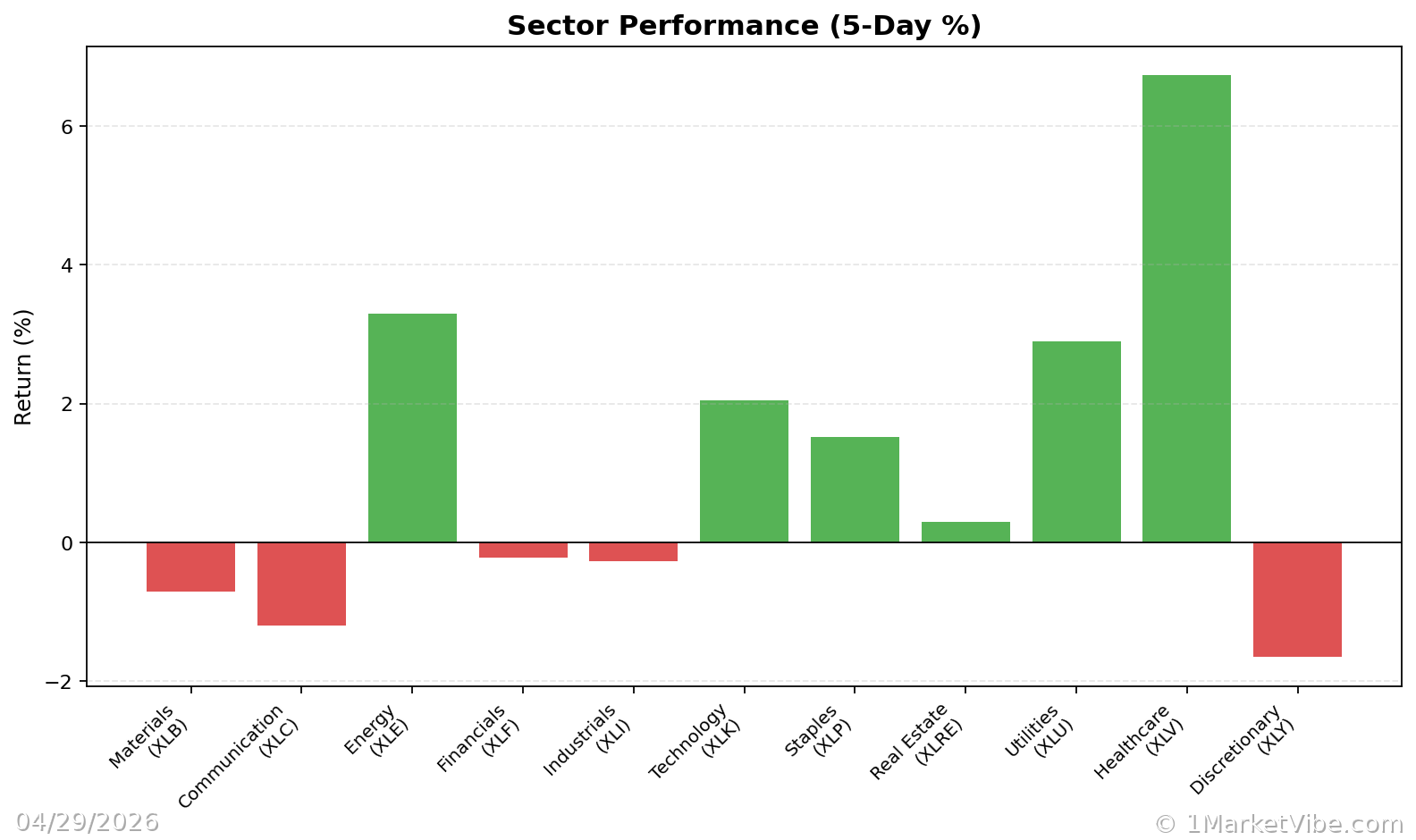
- Diversify Portfolio: Consider reducing exposure to energy stocks and increasing allocations to more stable sectors.
- Hedge Against Volatility: Use options or futures to hedge against potential oil price spikes.
- Monitor CW Index: Regularly check the CW Index for any movement towards the 6.5 level, which could signal increased risk.
- Adjust Risk Exposure: If the CW Index crosses 6.5, consider reallocating assets to minimize exposure to high-risk sectors.
Access MarketVibe's full Decision Edge framework at 1marketvibe.com →
Conclusion
The UAE's exit from OPEC highlights the fragility of the current energy market landscape. As investors navigate these uncertain waters, MarketVibe's Enhanced CW Index and Decision Edge™ Method provide critical tools for making informed decisions. By staying informed and proactive, investors can better manage risk and capitalize on potential opportunities. Built by investors, for investors, MarketVibe offers the insights needed to stay ahead in volatile markets.
Disclaimer: This article is for informational purposes only and does not constitute financial advice. Always consult with a financial advisor before making investment decisions.
Charts