CW Index Signals Market Adaptation Following Diesel Export Ban
- Authors

- Name
- MarketVibe Team
- @1marketvibe
CW Index Signals Market Adaptation Following Diesel Export Ban
The recent proposal by the Trump administration to ban diesel exports has stirred significant market reactions, particularly within the energy sector. As diesel prices continue to rise, the implications of such a policy shift are being closely monitored by investors. MarketVibe's proprietary Enhanced CW Index, a 0-10 scale that provides a 4-6 week early warning of market corrections by tracking institutional gold flows and market breadth, is currently at 6.5. This reading remains below the critical 7.0 threshold, indicating moderate risk but signaling potential market adaptation to the proposed ban.
Learn more about how CW Index works at 1marketvibe.com
Current Market Conditions
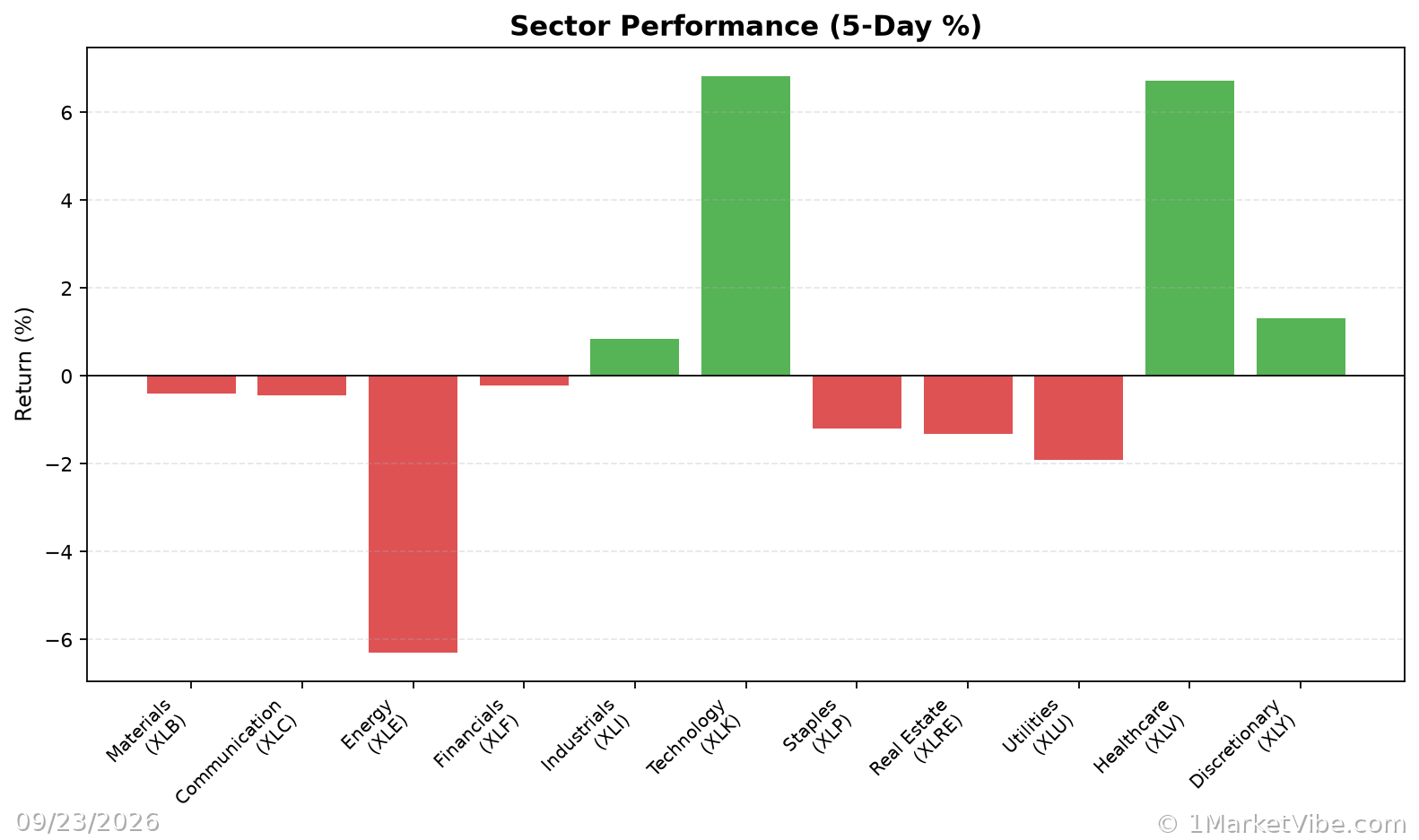
The diesel market is experiencing heightened volatility due to geopolitical tensions and supply-demand imbalances. Diesel prices have surged, driven by constrained supply chains and increased global demand. The proposed export ban aims to stabilize domestic prices but could exacerbate international supply shortages. According to MarketVibe data, the energy sector's performance is closely tied to these developments, with the CW Index suggesting that investors should remain vigilant.
Potential Effects of the Ban
Short-term Disruptions
- Price Volatility: Immediate market reactions could lead to increased price volatility as traders adjust to new supply constraints.
- Supply Chain Impact: Export restrictions may disrupt international supply chains, affecting global diesel availability.
Long-term Implications
- Energy Policy Shifts: The ban could signal a shift towards more protectionist energy policies, impacting long-term market stability.
- Market Stability: While aimed at stabilizing domestic prices, such measures may introduce new uncertainties in global markets.
Expert Opinions
Energy market analysts have offered diverse perspectives on the potential effectiveness of the diesel export ban. Some argue that the ban could provide temporary relief to domestic consumers, while others caution against unintended global repercussions. Historical parallels, such as the 1970s oil embargo, highlight the complex interplay between policy decisions and market dynamics. MarketVibe's CW Index historical patterns show that similar policy shifts have led to significant market corrections in the past.
CW Index Analysis
The current CW Index reading of 6.5 is crucial for understanding the market's response to the diesel export ban. Historically, when the CW Index reached 7.1 in March 2023, markets fell by 8.3% over the following month. The gold component of the CW Index provides an early warning, suggesting that investors should monitor any movement towards the 7.0 threshold. If the CW Index crosses 6.5, it may indicate increased market risk, warranting closer scrutiny of energy sector investments.
Risk Considerations
Investors should be aware of the potential risks associated with the diesel export ban. Market uncertainties, such as geopolitical tensions and fluctuating energy prices, could influence outcomes. MarketVibe's 4-6 week early warning system is designed to help investors anticipate these risks and adjust their strategies accordingly.
MarketVibe Decision Edge™: Your Action Plan
MarketVibe's Decision Edge™ Method simplifies complex market signals into three clear steps: Glance → Learn → Act. This proprietary framework is built by investors, for investors, to turn market intelligence into actionable decisions.
🔍 Glance (10-Second Takeaway)
- Current CW Index Reading: 6.5, indicating moderate risk
- Market Status: Yellow flag, suggesting caution
- Key Metric to Watch: CW Index movement towards 7.0
📚 Learn (2-Minute Deep Dive)
The diesel export ban proposal is a critical development in the energy market. Historical data shows that similar policy shifts have led to significant market volatility. The current situation is reminiscent of past energy crises, where policy interventions had far-reaching effects on market stability. Investors should monitor geopolitical developments and energy policy announcements closely. The CW Index's predictive capabilities offer valuable insights into potential market corrections, emphasizing the importance of early warning systems.
⚡ Act (Specific Steps)
- Monitor Position Sizing: Adjust energy sector allocations based on CW Index levels.
- Risk Exposure: Reduce exposure to high-risk sectors if the CW Index trends upwards.
- Hedging Strategies: Consider implementing hedging strategies to mitigate potential losses.
- Entry/Exit Criteria: Set clear criteria for entering or exiting positions based on CW Index movements.
Access MarketVibe's full Decision Edge framework at 1marketvibe.com →
Conclusion
The proposed diesel export ban represents a significant shift in energy policy with potential implications for market stability. MarketVibe's Enhanced CW Index provides a critical early warning system, helping investors navigate these uncertain times. By leveraging the Decision Edge™ Method, investors can make informed decisions and manage risks effectively. As the situation evolves, continued monitoring of market developments and CW Index movements will be essential.
Disclaimer: This article is for informational purposes only and does not constitute financial advice. Always consult with a financial advisor before making investment decisions.
Charts