

Aramco's 25% Profit Surge and Its Market Implications
Saudi Aramco, the world's largest oil company, has reported a remarkable 25% increase in first-quarter profits. This surge comes amidst a backdrop of tight global oil supplies and strategic shifts in export routes. As investors digest this news, MarketVibe's proprietary Enhanced CW Index provides a critical lens to assess the broader market implications. The CW Index, a 0-10 scale offering a 4-6 week early warning of market corrections by tracking institutional gold flows and market breadth, is currently at 5.4. This level remains below the 7.0 warning threshold, indicating moderate risk. Learn more about how the CW Index works at 1marketvibe.com.
Profit Surge Details
Aramco's 25% profit increase in Q1 2026 is a testament to its strategic agility and market positioning. The company's decision to shift exports away from the Strait of Hormuz has been a significant factor in this financial performance. This move not only mitigated geopolitical risks but also capitalized on the current high demand for oil. As global oil supplies remain constrained, Aramco's ability to adapt its export strategy has proven advantageous, allowing it to capture higher margins and enhance profitability.
Export Shift Strategy
The strategic decision to reroute exports from the Strait of Hormuz underscores Aramco's proactive approach to managing geopolitical tensions and logistical challenges. By diversifying its export routes, Aramco reduces its exposure to potential disruptions in one of the world's most critical chokepoints for oil transport. This shift is likely driven by a combination of risk management and the pursuit of operational efficiency, positioning Aramco to better serve its global customer base.
Market Implications
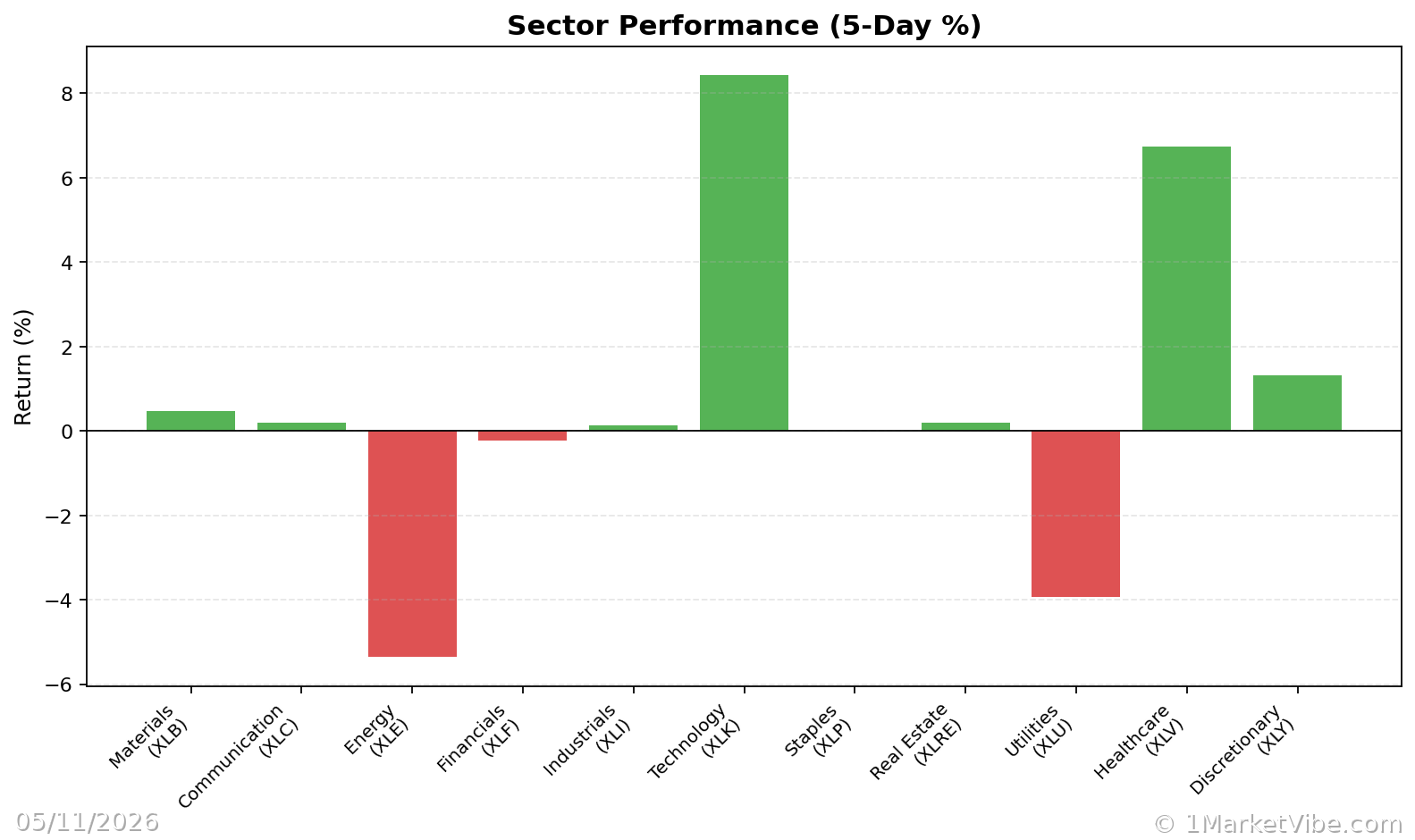
Aramco's export strategy and profit surge have significant implications for global oil prices and the broader energy market. As Aramco adjusts its supply routes, other oil producers may face increased competition and pressure to optimize their own logistics. This dynamic could lead to fluctuations in oil prices, impacting sectors reliant on energy costs. According to MarketVibe's Enhanced CW Index, these developments align with current market signals, suggesting potential volatility in the energy sector.
CW Index Connection
The current CW Index reading of 5.4 reflects a moderate risk environment, providing investors with a crucial early warning signal. Historically, when the CW Index reached 7.1 in March 2023, markets experienced an 8.3% decline over the following month. The gold component of the CW Index, which offers a 4-6 week advance notice, remains a key differentiator, enabling investors to anticipate market shifts. As we monitor the CW Index, a movement towards 6.5 could indicate rising risks, warranting closer attention.
Sentiment Analysis
Market sentiment surrounding Aramco's profit increase is largely neutral, with investors recognizing the strategic foresight behind the export shift. While the immediate market reaction has been tempered, the long-term implications of Aramco's strategy could influence investor confidence in the energy sector. MarketVibe tracks these sentiment shifts, providing insights into potential market movements.
MarketVibe Decision Edge™: Your Action Plan
MarketVibe's Decision Edge™ Method simplifies complex market signals into three clear steps: Glance → Learn → Act. This proprietary framework helps investors turn market intelligence into actionable decisions.
🔍 Glance (10-Second Takeaway)
- CW Index reading: 5.4 indicates moderate risk
- Overall market status: Yellow flag
- Key metric to watch: CW Index movement towards 6.5
📚 Learn (2-Minute Deep Dive)
Aramco's strategic shift in export routes highlights its ability to navigate geopolitical challenges effectively. This move not only enhances its operational resilience but also positions it to capitalize on high oil demand. Historically, similar strategic adjustments have led to significant market shifts. For instance, when Aramco previously adjusted its export strategies, it influenced global oil prices and sector performance. Investors should monitor the CW Index closely, as its predictive nature provides valuable insights into potential market corrections. Understanding these dynamics is crucial for anticipating changes in the energy sector and adjusting investment strategies accordingly.
⚡ Act (Specific Steps)
- Diversify Energy Holdings: Consider increasing exposure to diversified energy ETFs to mitigate sector-specific risks.
- Monitor CW Index Levels: Adjust portfolio allocations if the CW Index approaches 6.5, indicating heightened risk.
- Implement Hedging Strategies: Use options or futures to hedge against potential volatility in oil prices.
- Review Risk Exposure: Assess and adjust risk exposure in energy-dependent sectors to align with current market conditions.
Access MarketVibe's full Decision Edge framework at 1marketvibe.com →
Conclusion
Aramco's 25% profit surge underscores the strategic importance of adaptive export strategies in the face of global supply challenges. As the energy market evolves, MarketVibe's Enhanced CW Index and Decision Edge™ Method provide investors with the tools to navigate these complexities. By leveraging these insights, investors can make informed decisions that align with their risk tolerance and market outlook.
Disclaimer: This article is for informational purposes only and does not constitute financial advice. Always consult with a financial advisor before making investment decisions.
Charts