

The Impact of Oil's Surge on Market Volatility Insights
- Authors

- Name
- MarketVibe Team
- @1marketvibe
The Impact of Oil's Surge on Market Volatility Insights
In recent months, the surge in oil prices has captured the attention of traders and investors alike. This development has significant implications for market volatility, a critical factor that influences trading decisions. Understanding how oil price fluctuations impact market volatility can help traders make more informed decisions and manage risk more effectively. In this article, we will explore how MarketVibe's metrics can provide insights into this dynamic and how traders can incorporate these insights into their trading processes.
Orientation – What Are We Explaining?
Market Volatility is a measure of the rate at which the price of securities increases or decreases for a given set of returns. It is often used to gauge the uncertainty or risk associated with the size of changes in a security's value. Traders should care about volatility because it affects the risk and potential return of their investments. High volatility can lead to larger price swings, which can be both an opportunity and a risk.
MarketVibe provides several metrics to help traders understand and navigate volatility, including the ATR% (Average True Range Percentage), which measures volatility relative to price. This metric helps traders identify whether the market is in a stable or unstable phase, guiding their risk management and position sizing decisions.
How It Works – Mechanics & Data
The ATR% is calculated by taking the Average True Range (ATR) of a security and expressing it as a percentage of the security's price. The ATR itself is a measure of the average range between the high and low prices over a specific period, typically 14 days. By converting this range into a percentage of the current price, traders can compare volatility across different securities and timeframes.
For example, if a stock has an ATR of $2 and is currently priced at $50, the ATR% would be (2/50) * 100 = 4%. This means the stock's price typically moves within a 4% range over the observed period.
What moves the ATR%? Day-to-day changes in price range, driven by factors such as news events, economic data releases, and geopolitical developments, can cause the ATR% to fluctuate. In the context of rising oil prices, increased volatility in energy markets can spill over into broader market volatility, affecting the ATR% of related securities.
Interpretation – What Different Levels Tend to Mean
ATR% Ranges:
- Low ATR% (below 2%): Indicates a quiet, trending market with low volatility. Traders might expect stable price movements and consider larger position sizes.
- Moderate ATR% (2% to 5%): Suggests moderate volatility, where traders should be cautious but can still find opportunities in trending markets.
- High ATR% (above 5%): Signals high volatility, often associated with choppy or unstable markets. Traders may need to reduce position sizes and prioritize risk management.
Common Combinations:
- Strong breadth + low volatility: Typically seen in healthy bull markets where prices trend upward steadily.
- Weak breadth + rising volatility: Often occurs in topping environments or corrections, where uncertainty increases and prices become more erratic.
Real-World Scenarios – How This Shows Up in Markets
A Topping Environment: Imagine a scenario where major indices are reaching new highs, but the % Above 50-DMA is declining, indicating weakening breadth. At the same time, ATR% starts to rise, reflecting increased volatility. Traders might feel tempted to chase the rally, but a more informed view would suggest caution and a focus on defensive strategies.
A Strong Bull Leg: In a scenario where oil prices stabilize and % Above 50-DMA surges, indicating strong breadth, while ATR% remains low, traders might see this as a confirmation of a new bull leg. This environment supports adding exposure, provided that individual setups align with the broader trend.
A Volatility Spike: Following a geopolitical event that causes a sharp rise in oil prices, ATR% jumps significantly. The CWI (Crash Warning Index) also accelerates, indicating elevated risk. Traders might be tempted to panic sell, but a more informed approach would involve reassessing risk exposure and considering hedging strategies.
How to Use This Insight in a Process
- When breadth is weak and CWI is high, emphasize defense and reduce new risk. This means focusing on capital preservation and avoiding aggressive positions.
- When breadth and leadership broaden out, be more open to adding exposure if your setups are there. Ensure that the broader market conditions support your individual trades.
- Use the Market Dashboard as a high-level regime label, then check internals like ATR% and % Above 50-DMA for confirmation. This structured approach helps align your trading strategy with the prevailing market conditions.
Common Misuses & Misconceptions
- Treating ATR% as a stand-alone entry signal: ATR% should be used in conjunction with other indicators to assess market conditions, not as a sole basis for entering trades.
- Ignoring context: Traders often overlook sector rotation and broader market trends. It's essential to consider how different sectors respond to volatility and oil price changes.
- Overreacting to one-day changes: Volatility metrics can fluctuate daily. It's important to look at trends over time rather than reacting to short-term noise.
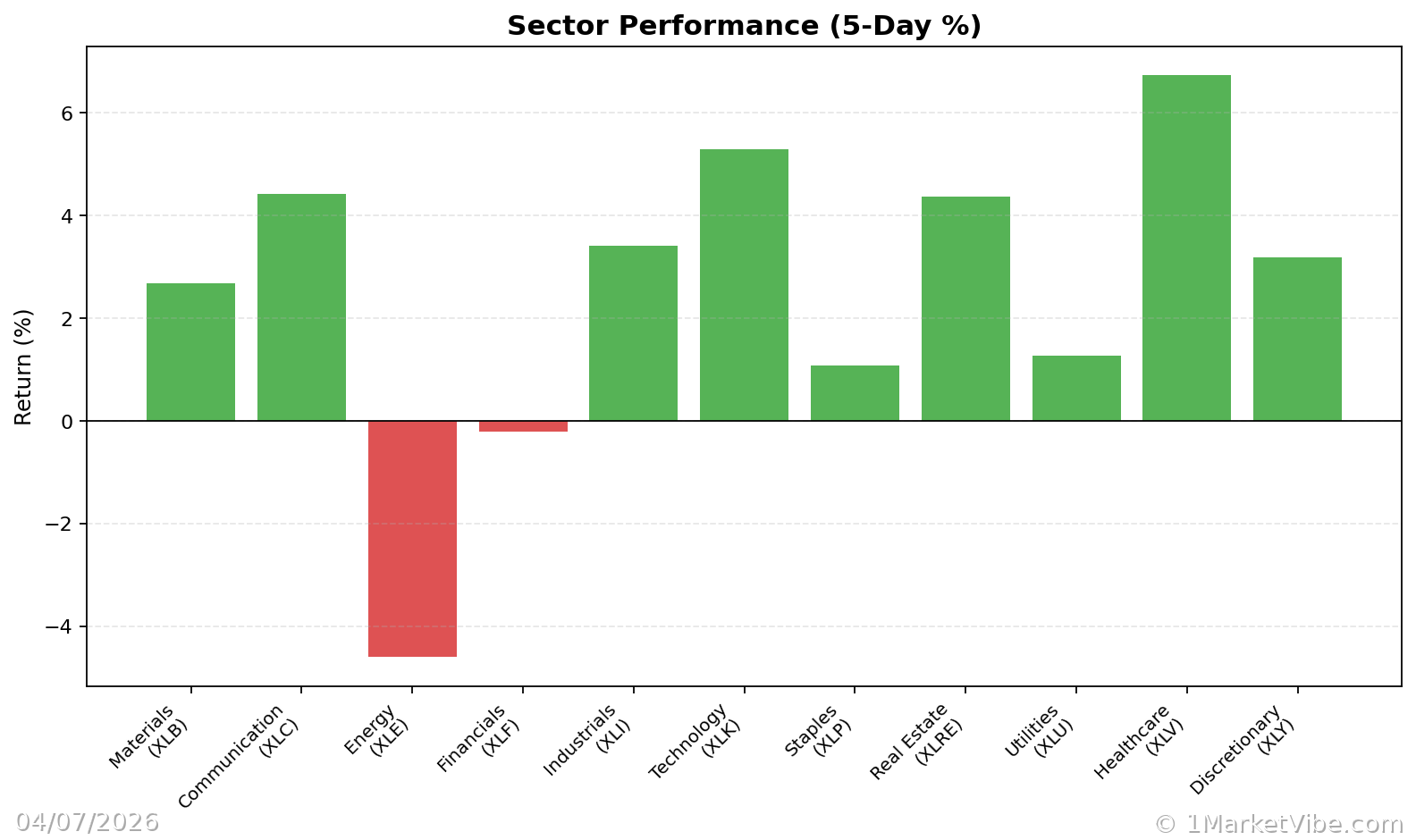
To see these breadth and risk metrics in one place each day, you can use the Decision Edge dashboard at 1marketvibe.com.
Disclaimer: This article is for informational purposes only and should not be considered as financial advice. Please consult with a financial advisor before making any investment decisions.