

Genesis GV90: Hyundai's Ambitious Venture into the Luxury Electric Vehicle Market
- Authors

- Name
- MarketVibe Team
- @1marketvibe
Understanding the Genesis GV90: Hyundai's Foray into Luxury Electric Vehicles
Hyundai's latest venture into the luxury electric vehicle market with the Genesis GV90 marks a significant milestone in the automotive industry. This all-electric large SUV, set to compete with other luxury giants like the Cadillac Vistiq and Mercedes-Benz EQS SUV, represents Hyundai's ambition to redefine luxury mobility. As traders and investors, understanding the implications of such market developments is crucial, as they can influence broader market trends and sector performances.
The Genesis GV90: A New Design Direction
The Genesis GV90 is not just another vehicle in Hyundai's lineup; it signifies a new design direction for the Genesis brand. This SUV offers up to seven seats and features innovative design elements such as coach doors, which are rare in the automotive industry. These doors, also known as suicide doors, enhance accessibility but require advanced engineering to meet safety standards. Hyundai's commitment to maintaining high safety standards while introducing such unique features highlights its dedication to innovation.
Why Traders Should Care
For traders, the launch of the GV90 is more than just a product release; it's a strategic move by Hyundai to capture a larger share of the luxury EV market. This can influence Hyundai's stock performance and affect related sectors, such as automotive suppliers and technology companies involved in EV production. Understanding these dynamics can help traders make informed decisions about their investment strategies.
Mechanics of the Luxury EV Market
The luxury EV market is characterized by high competition and rapid technological advancements. Hyundai's entry with the GV90 introduces a new player in a segment dominated by established brands. The GV90's high-performance electric motor system, capable of up to 660 horsepower, and an expected range of 310 miles, positions it as a formidable competitor.
Market Dynamics and Data
In the context of MarketVibe's metrics, the luxury EV market can be analyzed through several lenses:
- Breadth and Trend Health: The % Above 50-DMA metric can help assess the overall health of the automotive sector. A high percentage indicates strong market support for automotive stocks, including those involved in EV production.
- Volatility: The ATR% (Average True Range Percentage) measures market volatility. In a rapidly evolving market like luxury EVs, high ATR% can indicate increased uncertainty and potential for price swings.
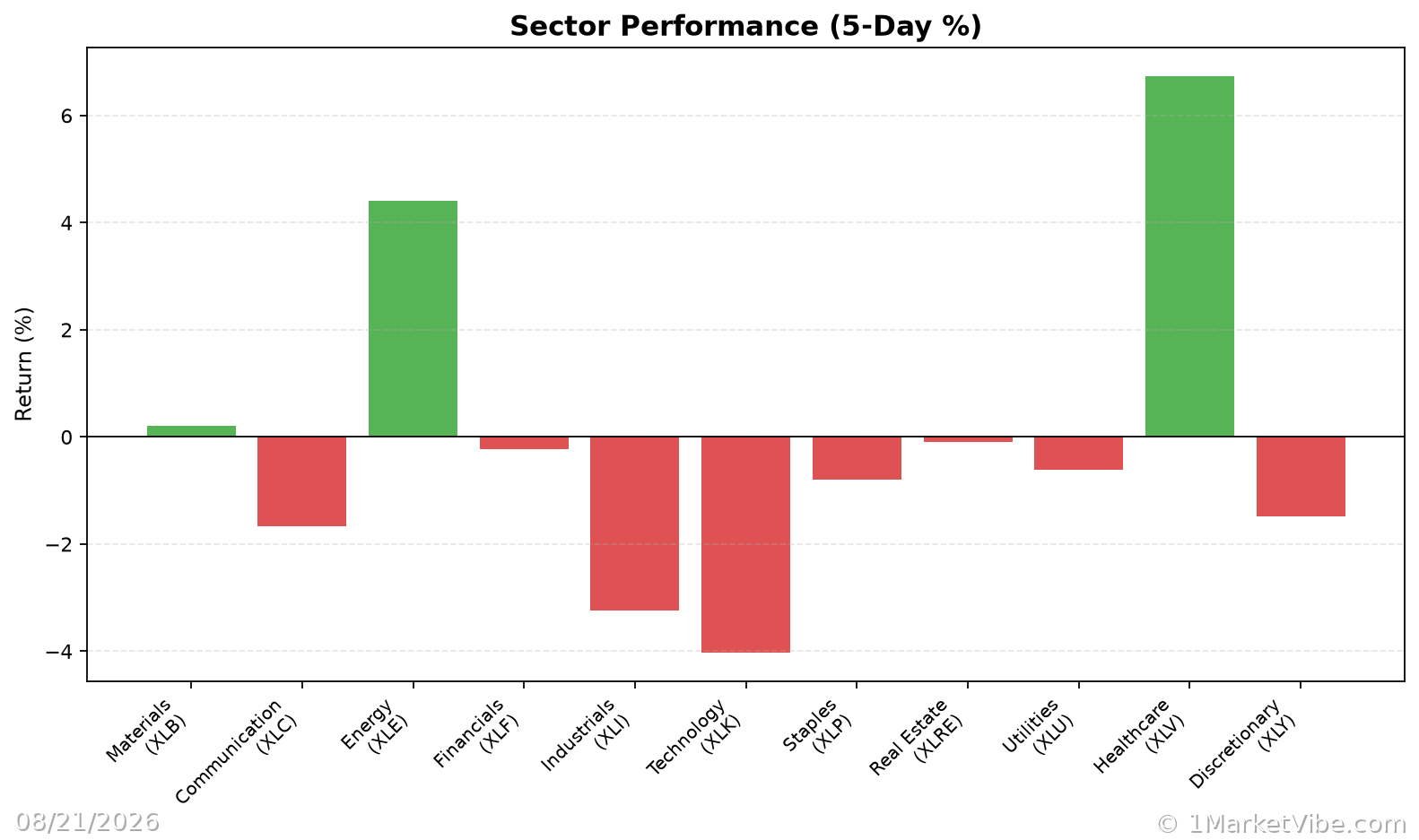
- Leadership and Rotation: Sector Scores can provide insights into which segments of the market are leading. A strong score for the automotive sector suggests robust investor interest and potential for growth.
Interpretation and Market Scenarios
Regimes and Ranges
- Strong Breadth + Low Volatility: Indicates a stable market environment where luxury EV stocks could perform well.
- Weak Breadth + Rising Volatility: Suggests caution, as market instability could affect luxury EV stocks adversely.
- Defensive Leadership: If defensive sectors are leading, it may indicate a risk-off environment, where investors prefer stability over growth.
Real-World Scenarios
Topping Environment: If the % Above 50-DMA for automotive stocks declines while indices remain high, it could signal a potential market top. Traders might be tempted to hold positions, but a more informed approach would be to reassess risk exposure.
Bullish Momentum: A surge in % Above 50-DMA, coupled with low ATR%, could indicate a strong bull leg for luxury EV stocks. Traders could consider increasing exposure, provided their setups align with this trend.
Volatility Spike: A sudden increase in ATR% and CWI (Crash Warning Index) could signal heightened risk. In such scenarios, reducing exposure and focusing on risk management would be prudent.
Incorporating Insights into a Trading Process
Practical Guidelines
- Risk Management: When breadth is weak and CWI is high, emphasize defensive strategies and limit new risk exposure.
- Opportunistic Exposure: When market breadth and leadership are strong, consider increasing exposure, but only if your trading setups are favorable.
- Regime Confirmation: Use the Market Dashboard to identify the current market regime and confirm it with internal metrics like breadth and volatility.
Common Misuses and Misconceptions
- Standalone Signals: Avoid using metrics like % Above 50-DMA as standalone buy or sell signals. They should inform your risk posture, not dictate specific trades.
- Ignoring Context: Always consider the broader market context, including sector rotation and macroeconomic factors, before making decisions.
- Overreacting to Daily Changes: Focus on trends and regimes rather than reacting to day-to-day fluctuations, which can lead to impulsive decisions.
To see these breadth and risk metrics in one place each day, you can use the Decision Edge dashboard at 1marketvibe.com.
Disclaimer: This article is for informational purposes only and does not constitute financial advice. Market conditions can change rapidly, and past performance is not indicative of future results. Always conduct your own research or consult with a financial advisor before making investment decisions.