

China Maintains Interest Rates Amid Rising Mideast Tensions Impacting Global Markets
- Authors

- Name
- MarketVibe Team
- @1marketvibe
China Maintains Interest Rates Amid Rising Mideast Tensions Impacting Global Markets
Introduction
China's recent decision to maintain its interest rates amidst escalating tensions in the Middle East has significant implications for global markets. As traders, understanding these dynamics is crucial for navigating the complex landscape of international finance. This article will explore how China's rate decision, coupled with geopolitical risks, impacts global markets and how MarketVibe's metrics, such as the Crash Warning Index (CWI), can provide valuable insights into current and future market conditions.
Current Economic Landscape
China's decision to keep its benchmark lending rates unchanged for the 11th consecutive month reflects a strategic move by the People's Bank of China (PBOC) to balance domestic economic growth with external uncertainties. The one-year Loan Prime Rate (LPR) remains at 3.0%, and the five-year LPR at 3.5%. This decision comes as China's economy grew by 5% in the first quarter of 2026, indicating robust growth that reduces the urgency for additional stimulus measures.
Mideast Tensions Overview
The geopolitical tensions in the Middle East, particularly the rising global oil prices, have introduced new risks to the global economic outlook. These tensions can lead to increased volatility in financial markets, affecting investor sentiment and potentially disrupting global supply chains. Understanding these risks is essential for traders who need to adjust their strategies in response to shifting market conditions.
Impact on Global Markets
China's decision to hold interest rates steady could influence investor sentiment by signaling confidence in its economic stability. However, the ongoing Middle East tensions might counterbalance this sentiment by introducing uncertainty. The ripple effects could extend to other economies, influencing currency stability, commodity prices, and overall market volatility.
CW Index Connection
The Crash Warning Index (CWI) is a composite indicator that aggregates various risk dimensions, including market breadth, volatility, and defensive behavior. Currently, the CWI stands at 3.9, suggesting a moderate level of risk. This reading indicates that while the market is not in immediate danger of a crash, traders should remain vigilant as geopolitical tensions could escalate risks.
How the CWI Works
The CWI is constructed by analyzing several market factors:
- Breadth: Measures the percentage of stocks above their 50-day moving average, indicating the health of market trends.
- Volatility: Assessed through metrics like ATR% (Average True Range as a percentage of price), which gauges market stability.
- Defensive Behavior: Observes the performance of defensive sectors relative to the broader market.
Day-to-day movements in the CWI are influenced by changes in these underlying components. For instance, a spike in volatility or a decline in market breadth could push the CWI higher, signaling increased risk.
Interpretation of CWI Levels
- CWI below 3: Generally indicates a stable market environment with low risk of correction.
- CWI between 3 and 6: Suggests moderate risk, where traders should be cautious and possibly reduce exposure to high-risk assets.
- CWI above 6: Signals elevated risk, where market corrections are more likely, and defensive strategies should be prioritized.
Real-World Scenarios
Scenario 1: Topping Environment
Imagine a scenario where the market index continues to rise, but the percentage of stocks above their 50-day moving average declines. This divergence often precedes a market top. In such a case, the CWI might rise due to weakening breadth, even as the index appears strong. Traders might be tempted to chase the rally, but a more informed approach would be to tighten stop-losses and prepare for potential reversals.
Scenario 2: Bull Market Surge
In a strong bull market leg, the % Above 50-DMA might surge and remain elevated, indicating robust market health. The CWI would likely remain low, reflecting reduced risk. Traders could consider increasing exposure, provided their setups align with broader market trends.
Scenario 3: Volatility Spike
During a geopolitical crisis, such as escalating Middle East tensions, volatility might spike, causing the ATR% to rise. The CWI would likely increase, signaling heightened risk. Traders should consider hedging strategies and reducing leverage to protect against potential market swings.
How to Use This Insight in a Process
- When breadth is weak and CWI is high, emphasize defense by reducing new risk and focusing on capital preservation.
- When breadth and leadership broaden out, be more open to adding exposure, ensuring that your setups align with the broader market context.
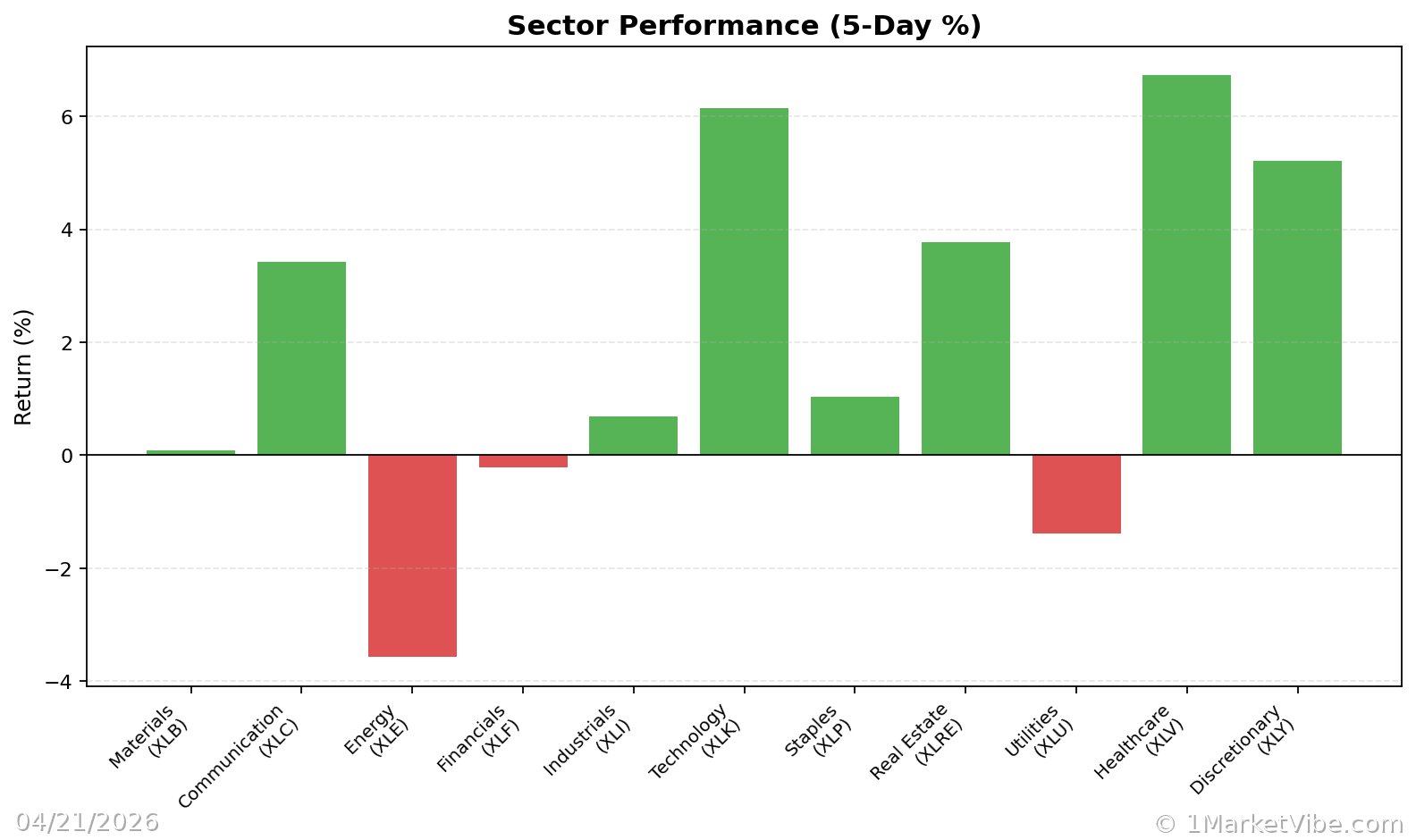
- Use the Market Dashboard as a high-level regime label, then check internals like the CWI and sector scores for confirmation.
Common Misuses & Misconceptions
Treating CWI as a Stand-Alone Signal: The CWI should not be used in isolation for entry or exit decisions. Instead, integrate it into a broader analysis that includes market context and sector rotation.
Ignoring Context: Focusing solely on the CWI without considering geopolitical events or sector performance can lead to misinformed decisions. Always contextualize the CWI within the current market environment.
Overreacting to One-Day Changes: The CWI is more reliable over a series of readings rather than reacting to daily fluctuations. Use it to identify trends rather than short-term noise.
To see these breadth and risk metrics in one place each day, you can use the Decision Edge dashboard at 1marketvibe.com.
DISCLAIMER: This article is for informational purposes only and does not constitute financial advice. Always conduct your own research before making investment decisions.